When standing before an abstract painting, the most common—and often daunting—question people ask is, "What is this supposed to be?" For educators, that uncertainty often turns into teaching anxiety: How can I teach something that feels so open to interpretation?
The Paul Chiang Art Center, set against the coastal hills of Jinzun in Taitung, Taiwan, addressed this question head-on during its 2026 Summer Educator Workshop. Building on its inaugural program—which centered on the principle that "education begins only after one is deeply moved"—this year’s session brought together over thirty educators from across Taiwan under a new framework: "Once deconstructed, abstract art reveals its doorway."
Through immersive observation, dialogue with the artist, and hands-on exercises in instructional design, the workshop sought to equip teachers with practical tools to guide young minds into the world of abstract expression.
An Exclusive Encounter in Jinzun
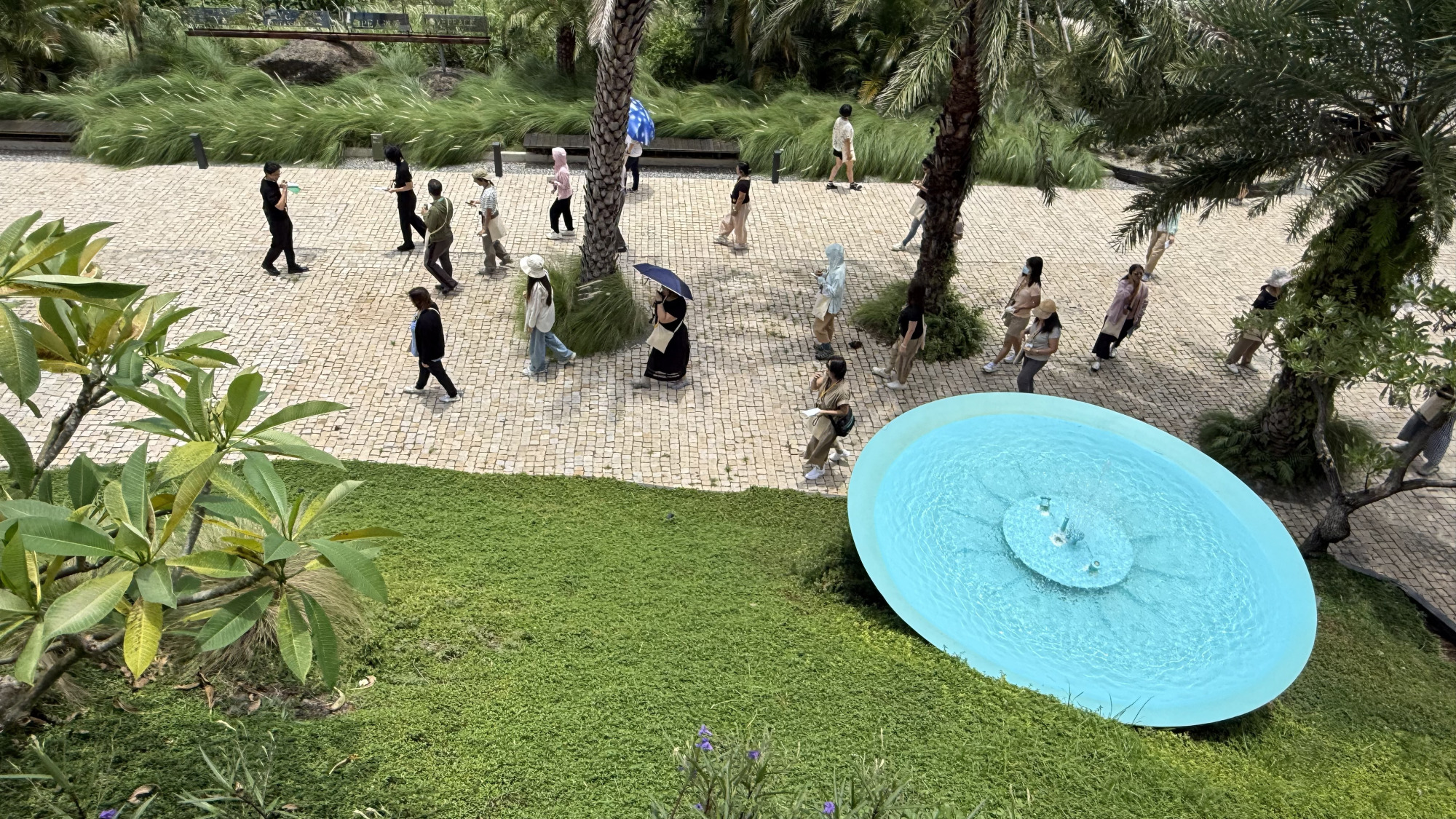
The workshop began on a day when the center was closed to the public, offering participating educators uninterrupted access to the site’s architectural spaces and natural surroundings. Surrounded by coastal breezes, birdsong, and the shifting light across fair-faced concrete walls, participants engaged in focused observation.
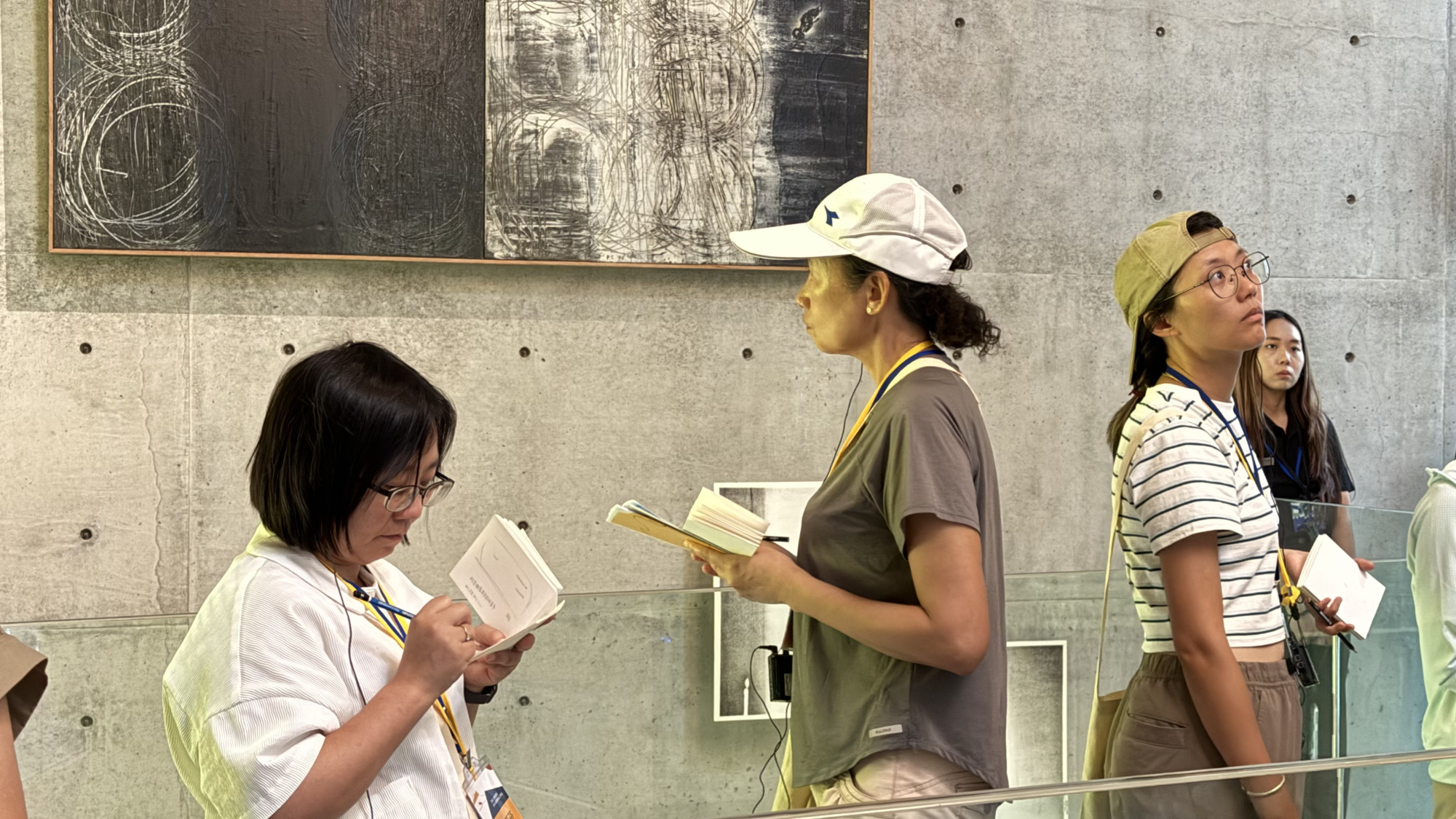
Setting aside their smartphones, the teachers used accordion sketchbooks, observation cards, and pencils to capture their surroundings. They studied the thick, layered impasto of Paul Chiang’s canvases, observed how color echoed musical rhythm in his Jazz/Jinzun series, and reflected on the quiet solitude conveyed through his darker tonal passages.
In the afternoon, the group gathered for an interactive session with six museum staff members. Structured as a World Café, the exchange allowed teachers to ask detailed questions about the center’s daily operations, curatorial choices, and behind-the-scenes stories—including Chiang’s disciplined daily routines.
The highlight of the day came when Paul Chiang himself unexpectedly joined the gathering. "If you have any questions," he told the group, "you can ask the artist directly."
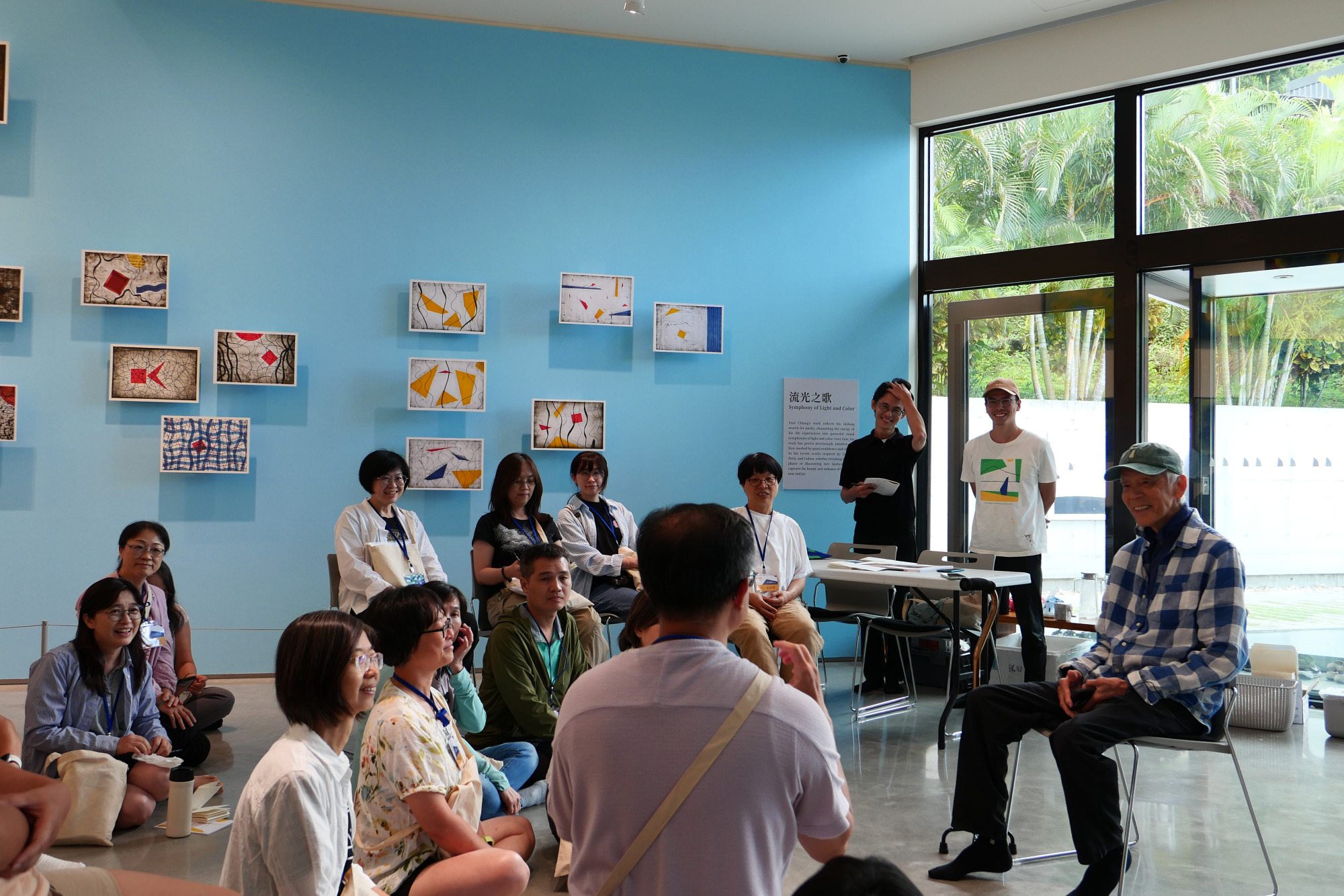
Chiang spoke candidly about his artistic journey, reflecting on his formative school years, his time living and working in Paris and New York, and his eventual decision to settle in Taitung, where his work underwent a profound creative rebirth.
Addressing the educators directly, Chiang emphasized the role they play in society:
"You are on the frontlines nurturing the next generation—that work is more important than anything else. Decades ago, previous generations struggled simply to meet their basic needs. Today, our material lives are secure, but my greatest hope is that you will bring children to museums and art centers often. Cultivating an appreciation for art and music is just as vital as any academic subject."
The day concluded with a relaxed gathering at the center’s Café Debussy, giving participants time to process their impressions before transitioning into lesson design over the following two days.
Deconstructing Abstract Art for the Classroom
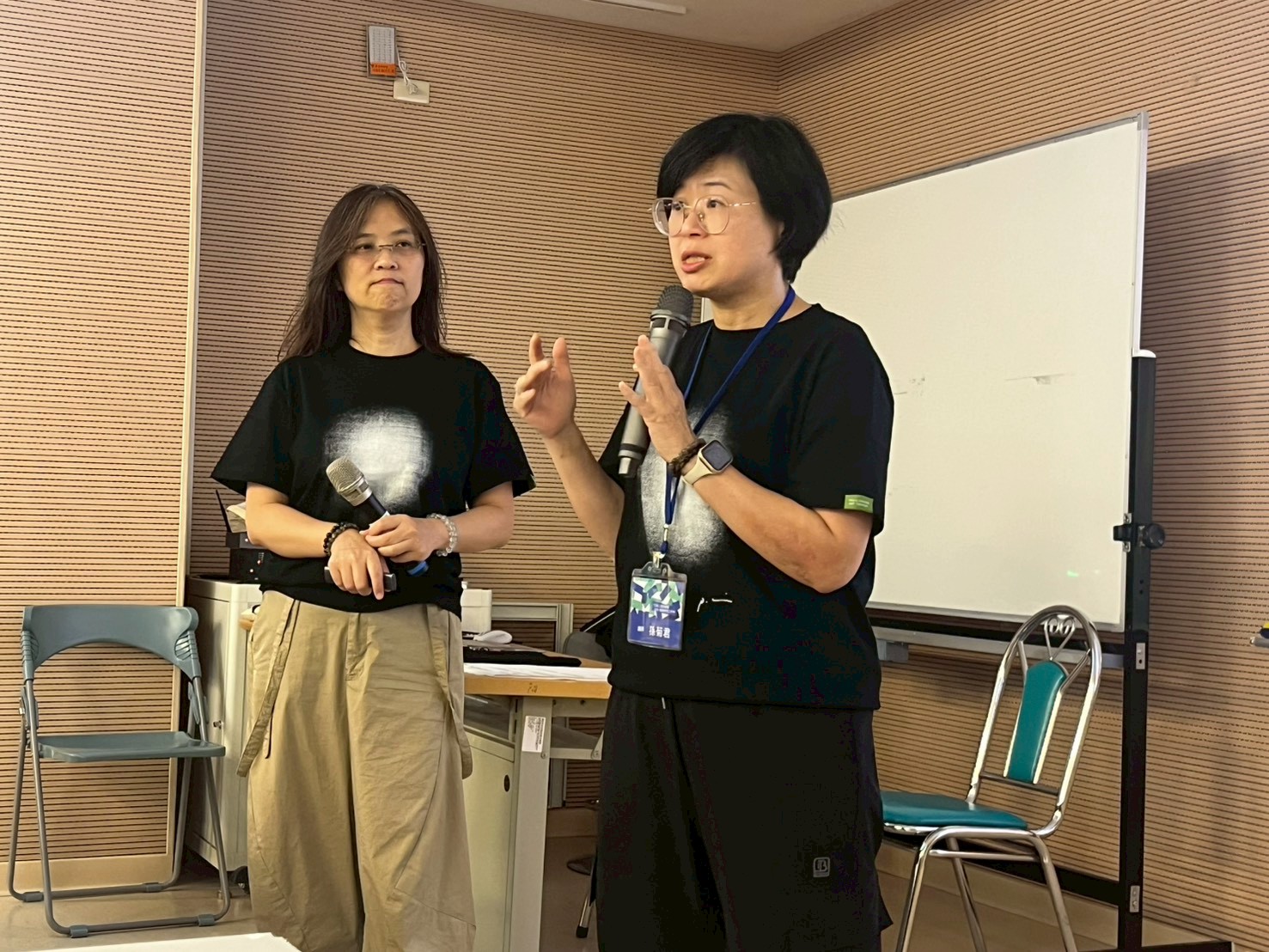
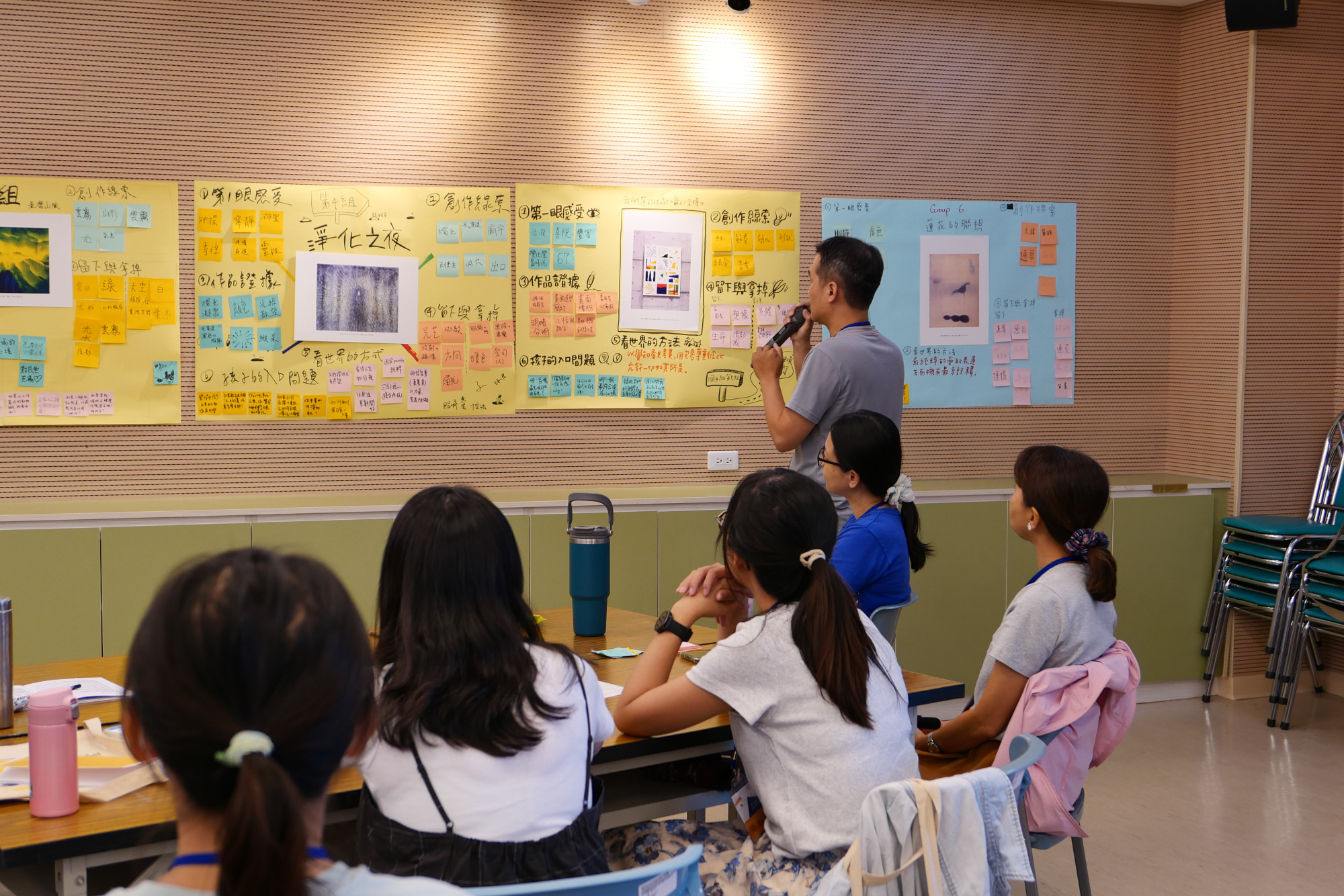
Reflecting on art is essential, but transforming those insights into effective teaching strategies requires structure. On the second day, workshop leaders Sun Ju-chun and Lin Fu-chun introduced exercises designed to make abstract art more accessible and engaging for students.
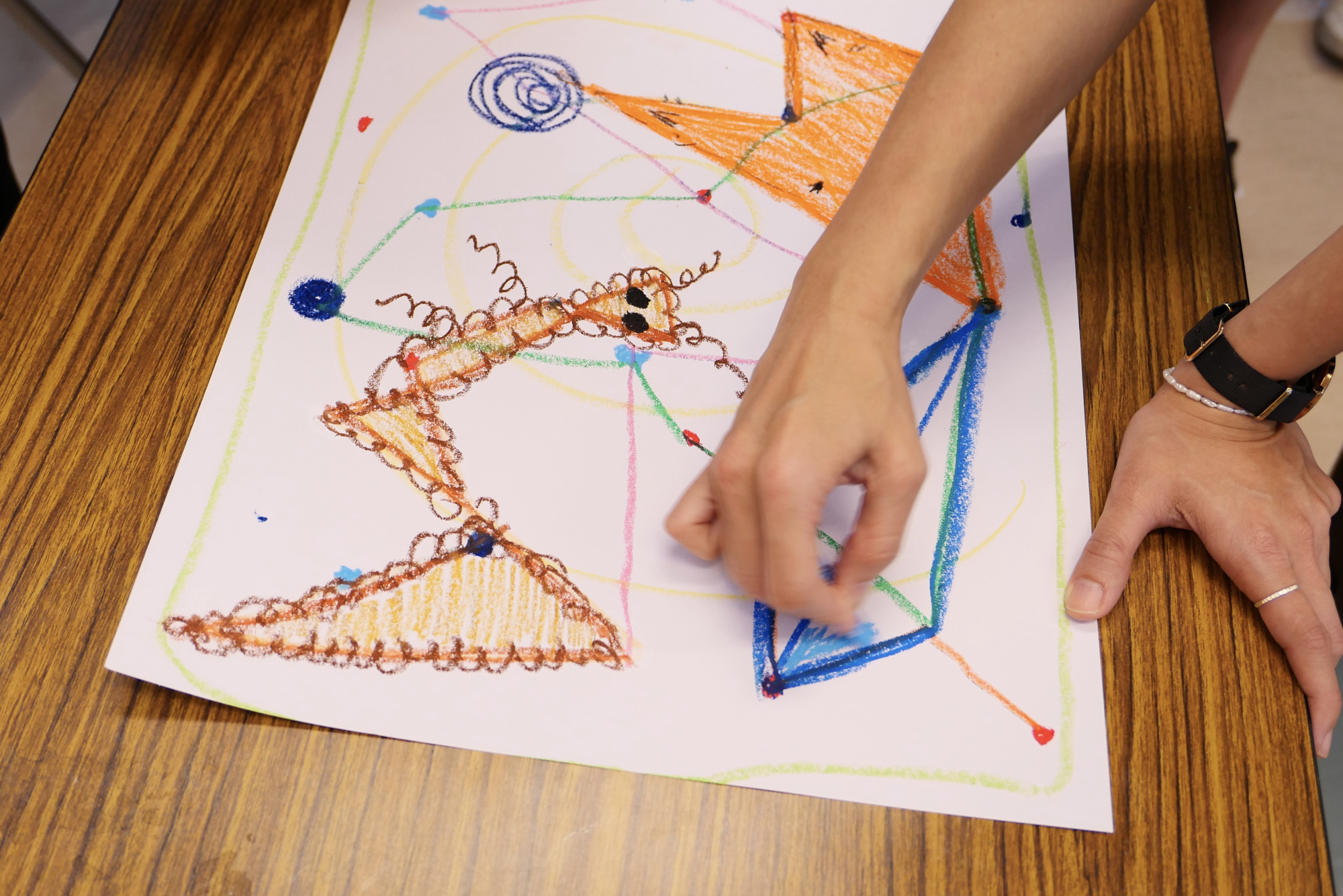
The session began with interactive icebreakers. Lin noted that art, much like food, should first be enjoyed: "Drawing is humanity's most primal form of expression, and points and lines are its starting points." Working in pairs, participants took turns drawing points, lines, and shapes on paper, creating visual narratives without relying on realistic drawing techniques.
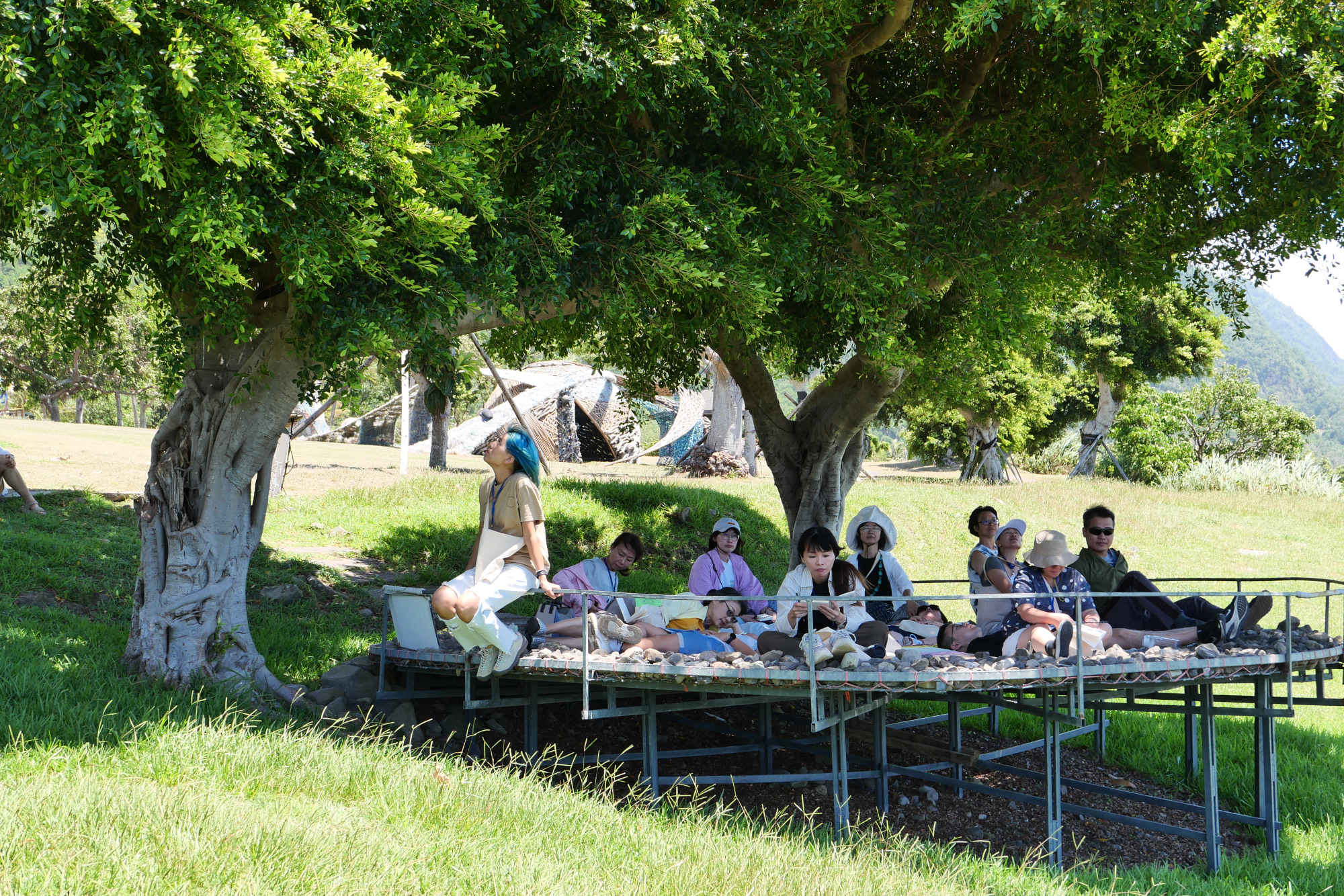
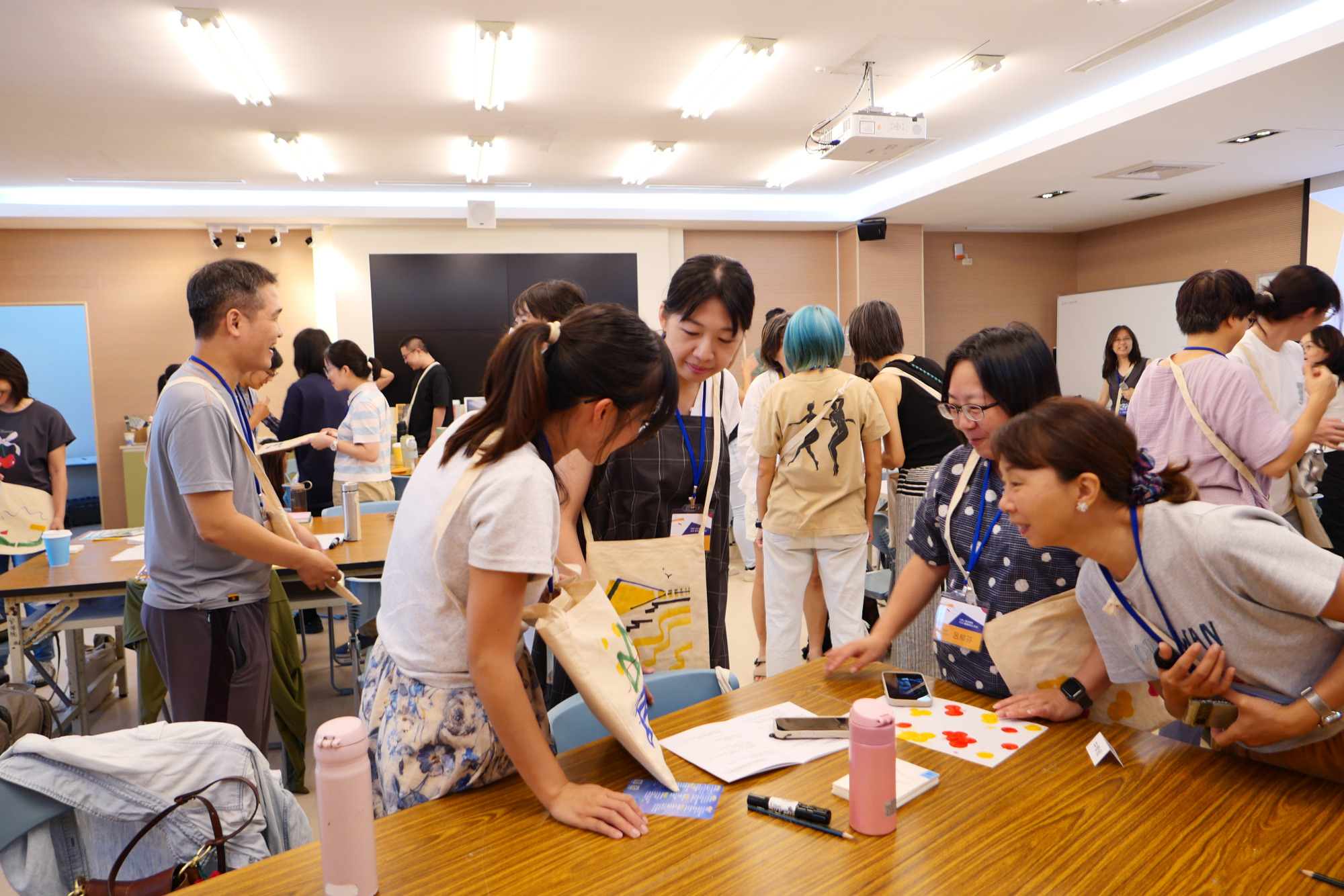
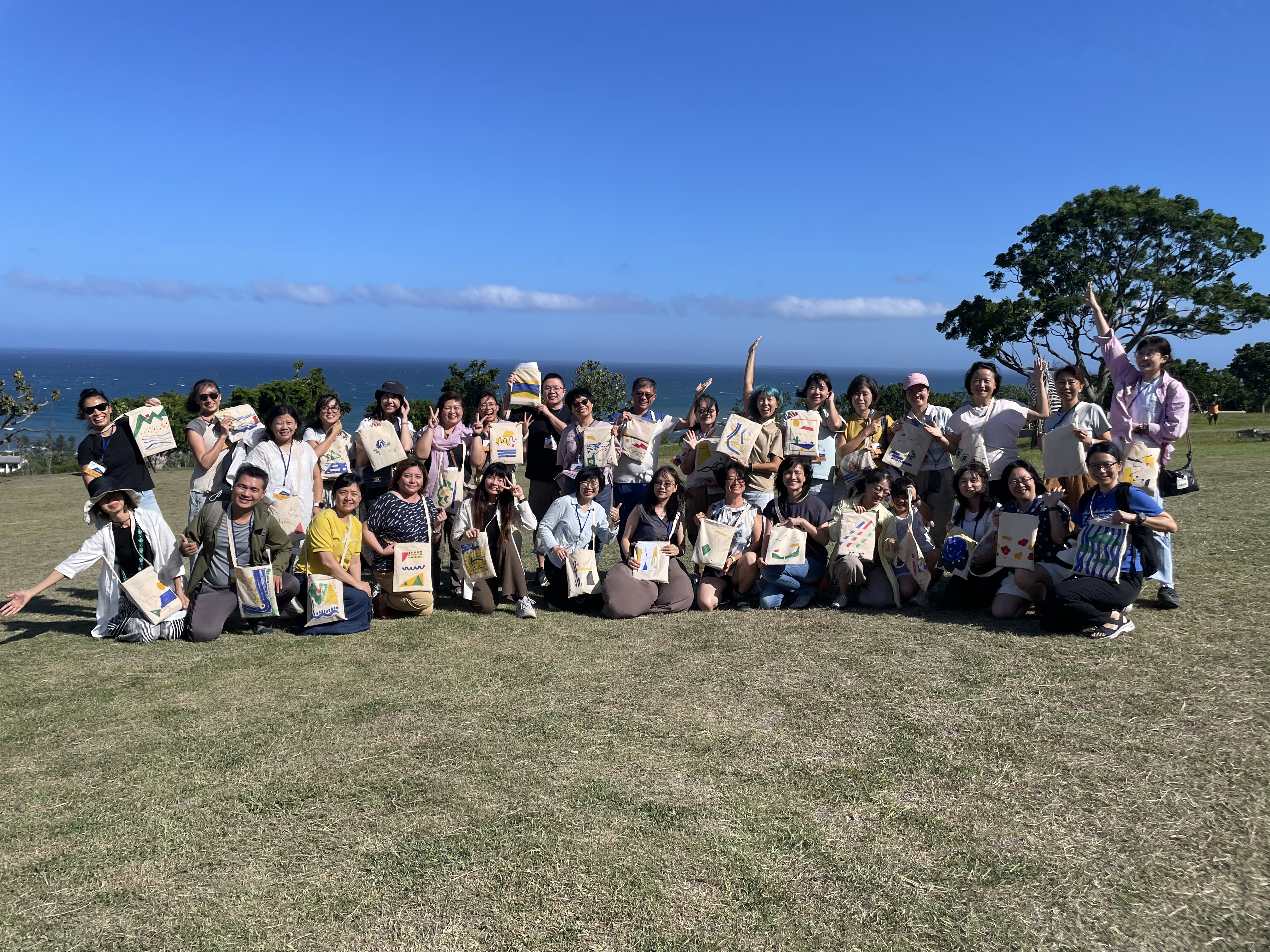
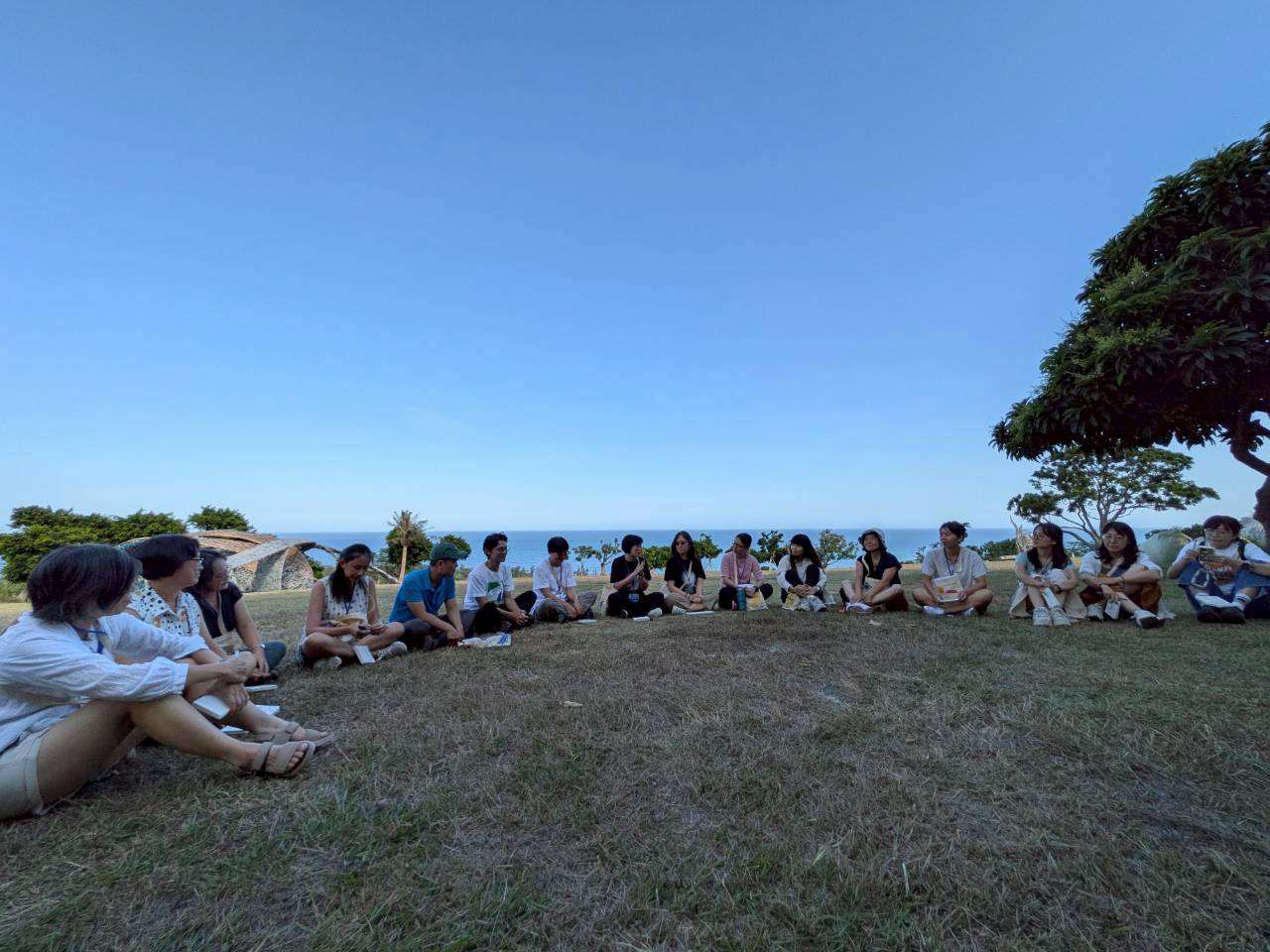
To connect artistic expression with the local environment, the group moved outdoors to the grassy lawn overlooking the Pacific Ocean and nearby mountain ranges. Seated together, the teachers spent three minutes listening silently to the ocean waves and wind. Afterward, instructor Sun asked everyone to trace the contours of the horizon and ridges in the air with their fingers, then distill those impressions into minimalist line drawings on canvas bags.
Building Entry Points Through Artful Questioning
For educators, the primary challenge is helping students build a personal connection with abstract works.
"As a teacher, I don't expect children to fall in love with abstract art right away, but we must create entry points," Sun explained. She emphasized that the key lies in asking open-ended, engaging questions. Rather than asking what the artist intended, teachers might ask: "Why do you see the painting this way?" or "What colors would you use if you were creating this?"
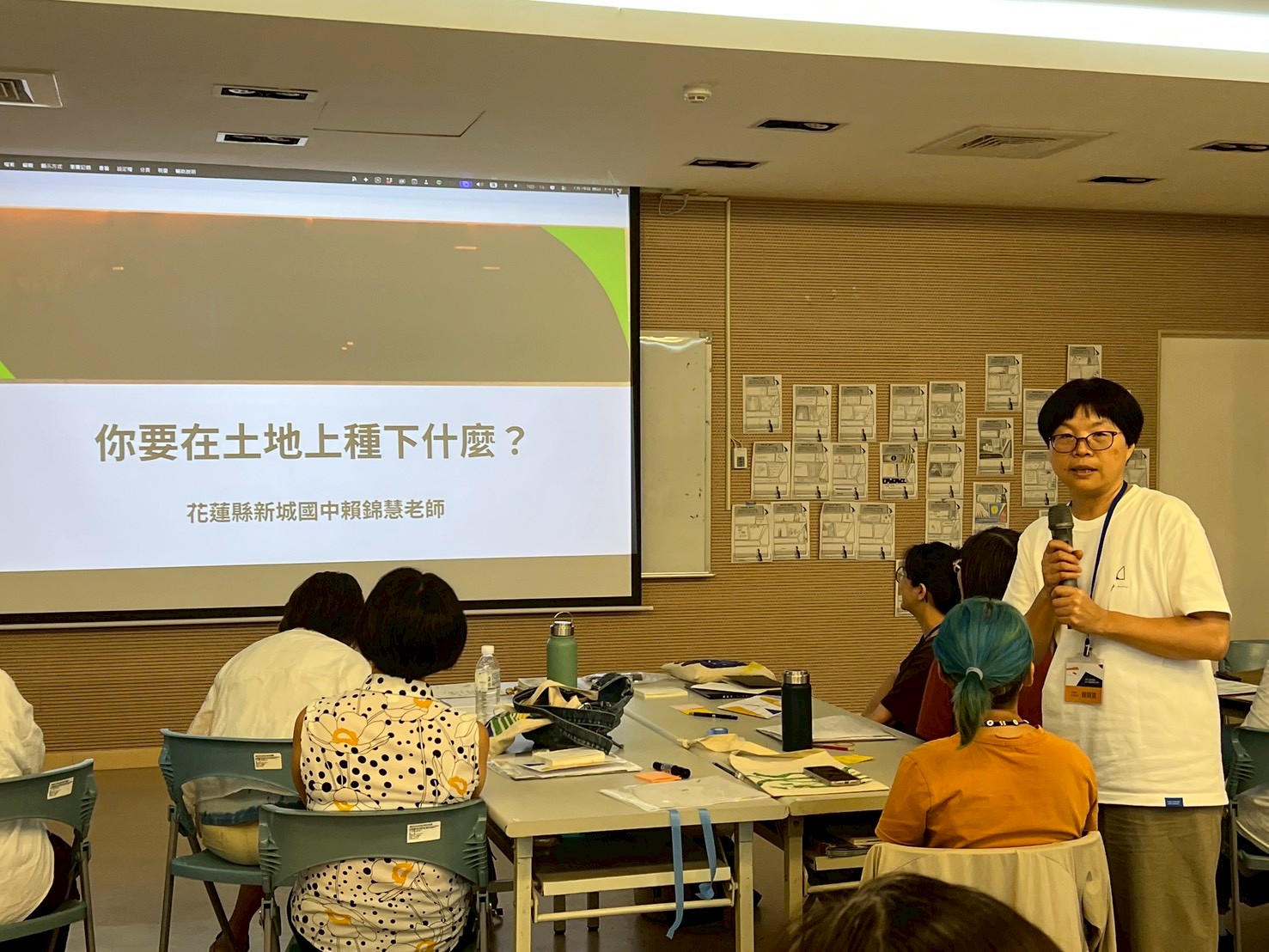
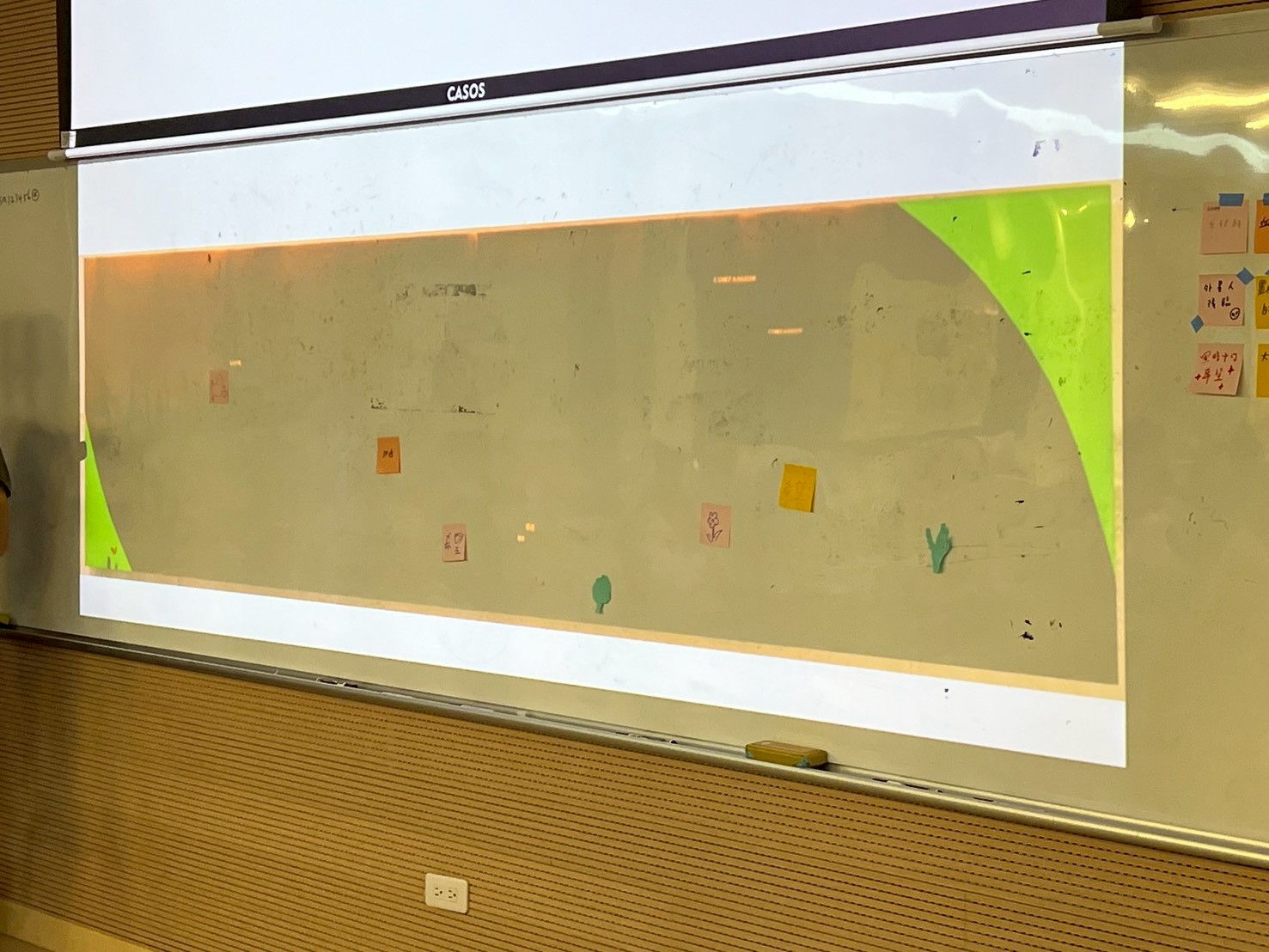
Drawing on the "Artful Thinking Palette" developed by Harvard’s Project Zero, Sun demonstrated how targeted prompts can spark curiosity:
Looking at Mountain Range of Taiwan, a teacher might ask: "If you were to build a house on this mountain, where would you place it?"
Viewing Sketches from Europe, the prompt might become: "Close your eyes—what do you hear inside this painting?"
Standing before Jazz/Jinzun, students might be asked: "If these blocks of color were dance studios, which one would you enter?"
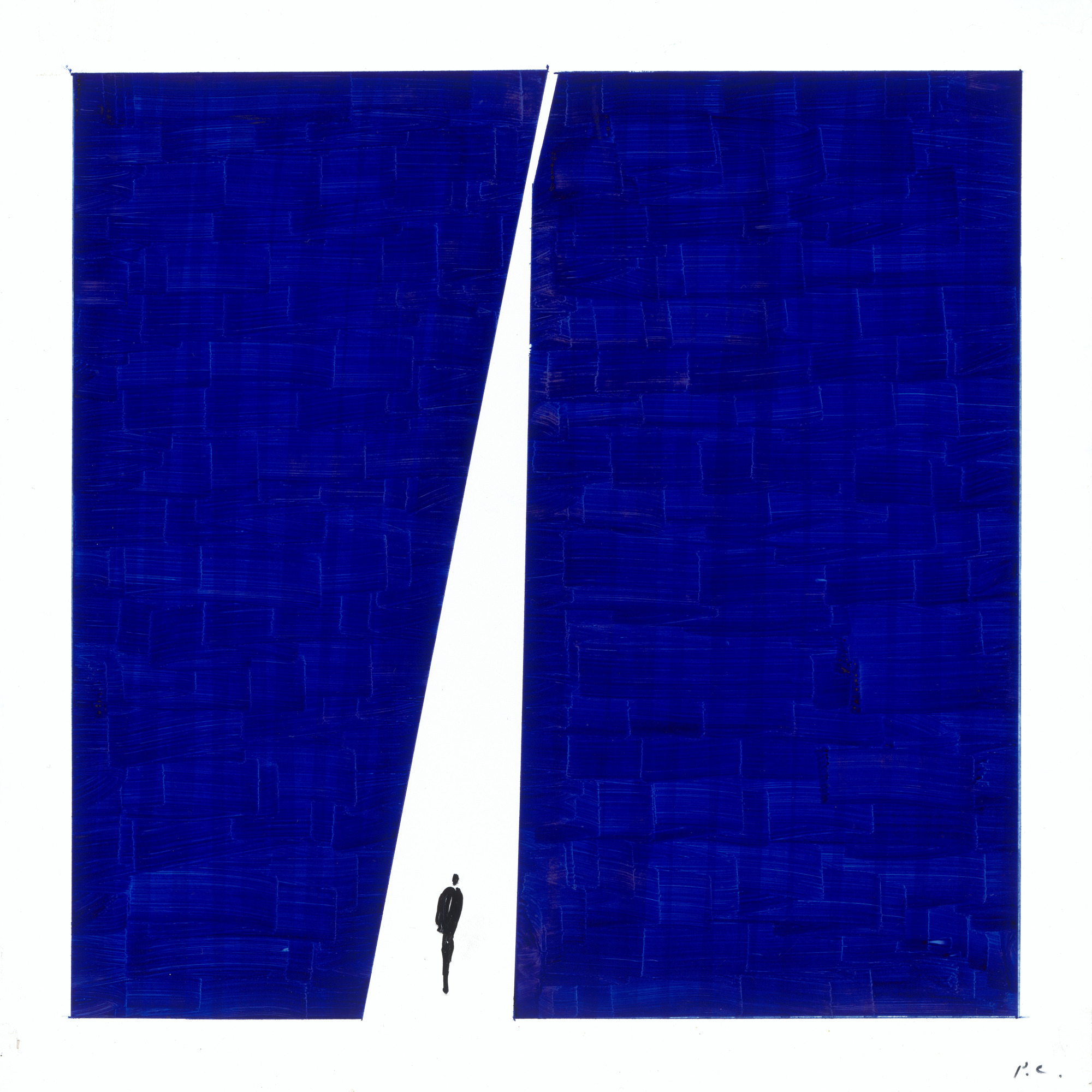
Through these techniques, abstract art ceases to be an opaque puzzle. Instead, it becomes a mirror reflecting the viewer's own thoughts, feelings, and imagination.
Planting Seeds for the Future
By breaking down complex concepts into practical teaching frameworks, the workshop provided educators with tools they could bring back to their classrooms.
As the workshop drew to a close, participants left Taitung not only with renewed personal inspiration, but also with practical methods to help the next generation discover, question, and appreciate the world of abstract art. The seeds planted during these summer days are now beginning to sprout, carried back into classrooms across Taiwan through each educator’s renewed curiosity, confidence, and imagination.