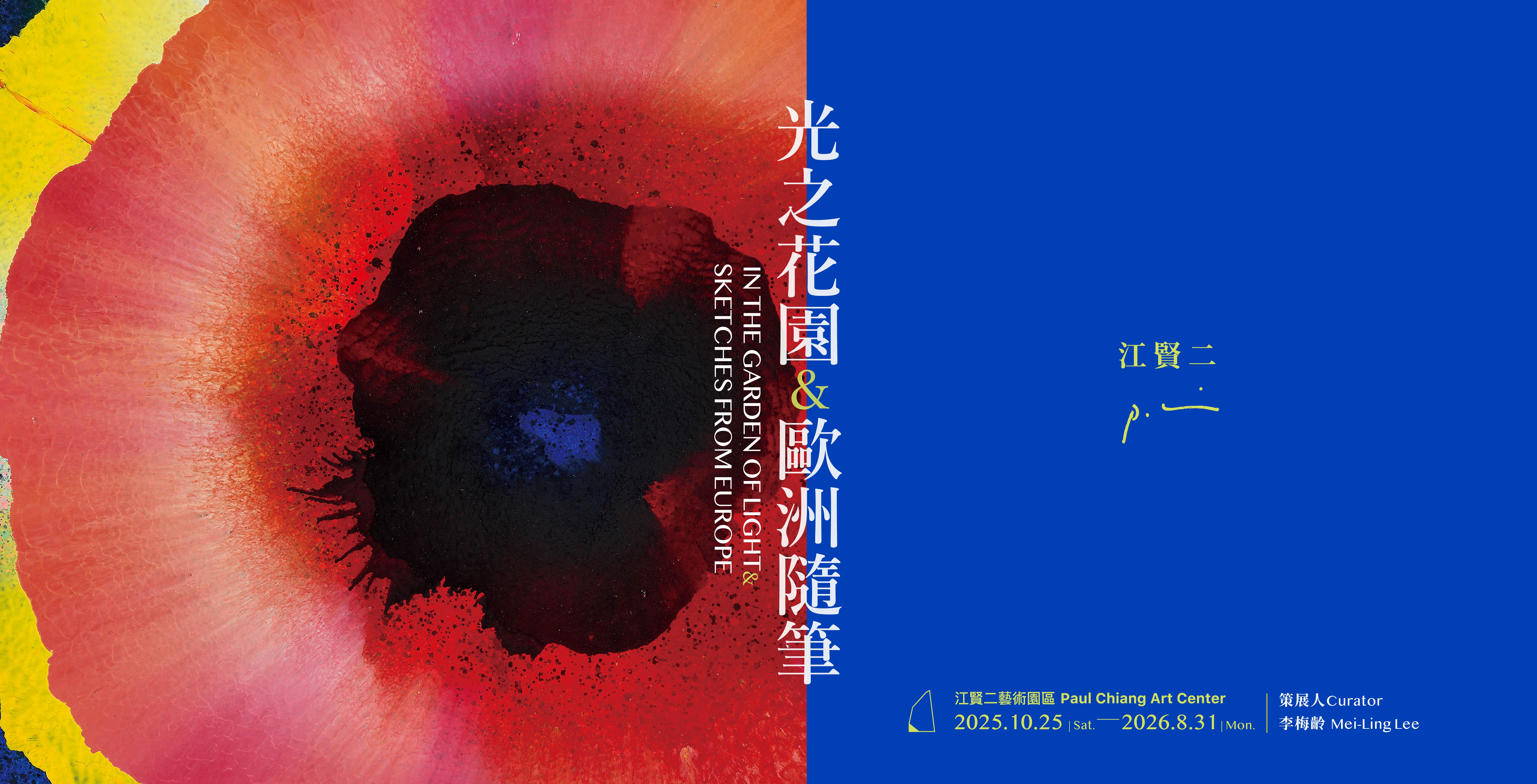
In March 2025, after years of planning, the vision of the Paul Chiang Art Center finally opened in phases. With this major milestone reached and a weight lifted from his shoulders, artist Paul Chiang set off for Lisbon to spend time creating and resting with his family. Situated along the Atlantic coast and described by Chiang as a place where the light is crisp and bright, Lisbon offered abundant creative inspiration. The Sketches from Europe series, completed in Paris and Lisbon, reflects a style that is more simplified, pure, and modern. Meanwhile, the In the Garden of Light series created in Taitung is lively, powerful, and full of energy. Over the six months following the opening of the Art Center, Chiang’s artistic momentum did not slow; instead, it became even richer and more diverse, culminating in this exhibition unveiled in late October 2025.
In addition to the In the Garden of Light & Sketches from Europe, this exhibition also includes the Jazz-Jinzun works completed during the construction period of the Art Center, along with selected pieces from the past two years. Gallery 3 (Cheng-Han Gallery) returns to Chiang’s timeless and spiritual works, highlighted by the kinetic sculpture Jinzun - Transfigured Night. Positioned within the double-height first floor space, gentle daylight slowly cascades down, as if awakening the inner spiritual force of the work.
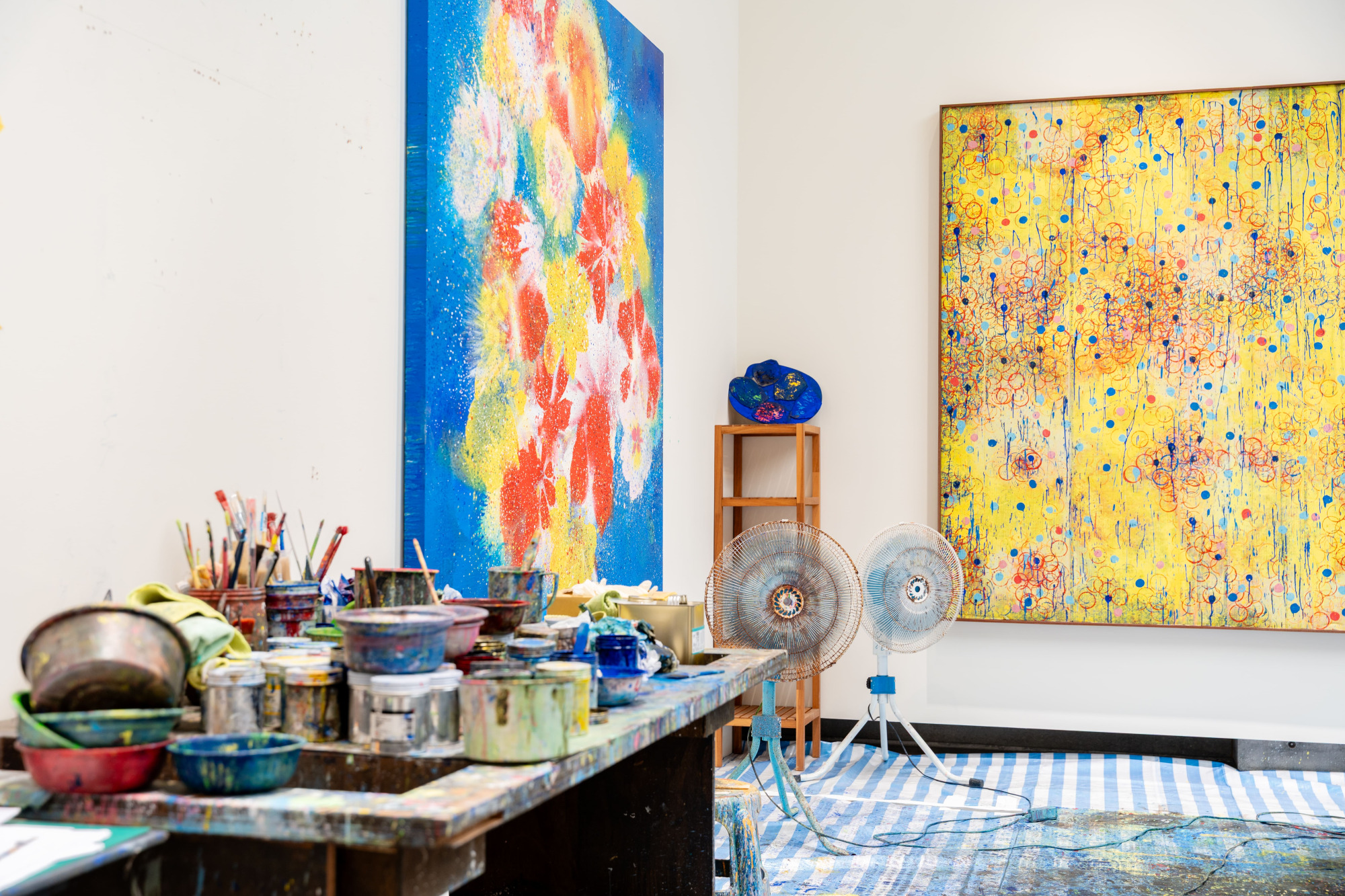
Most notably, 60% of Gallery 1 will be reserved as Chiang’s working studio and opened to the public for the first time. Continuing his daily ritual, Chiang will enter the studio before dawn to create, and leave before the center opens. Visitors will have the rare opportunity to witness works actively in progress. This space extends the artist’s presence, offering a glimpse into how he creates, observes, and receives and responds to the world around him. If appreciating completed works is one way to understand an artist, then stepping into a “working” studio opens a new pathway inviting visitors to explore the artist’s inner world from a fresh perspective.
Sketches from Europe: I am either creating, or on the way to create
Every morning at six o’clock, Chiang wakes, washes up, has a simple breakfast, and begins his workday in Lisbon. He rented a small studio and devoted himself daily to developing new work. In the afternoons, he would walk to the small café across from the studio for a brief break, then continue working until seven or eight in the evening before “clocking off.” Although Lisbon is a beloved destination for travelers from around the world, Chiang’s life there was simple and disciplined. His daily movement rarely extended beyond a twenty-minute walk from the studio.
Lisbon, situated along the Atlantic coast, is a historic Western European city like London, Paris, and Rome. Despite the summer heat, the average temperature was still lower than in Taitung. Chiang described Lisbon’s sunlight as “crisp, and during these two months, only two days were without sun – everyday was bright blue skies.” With four to five-story buildings reminiscent of Paris, beige walls paired with red tile roofs, yet lacking the crowded bustle of Parisian tourism, Lisbon’s sunlight and perfectly balanced air and humidity shone across the water by the docks, reflecting onto the sculptural architecture and the undulating streets of its hillside cityscape. Everything about the city offered Chiang fresh inspiration.
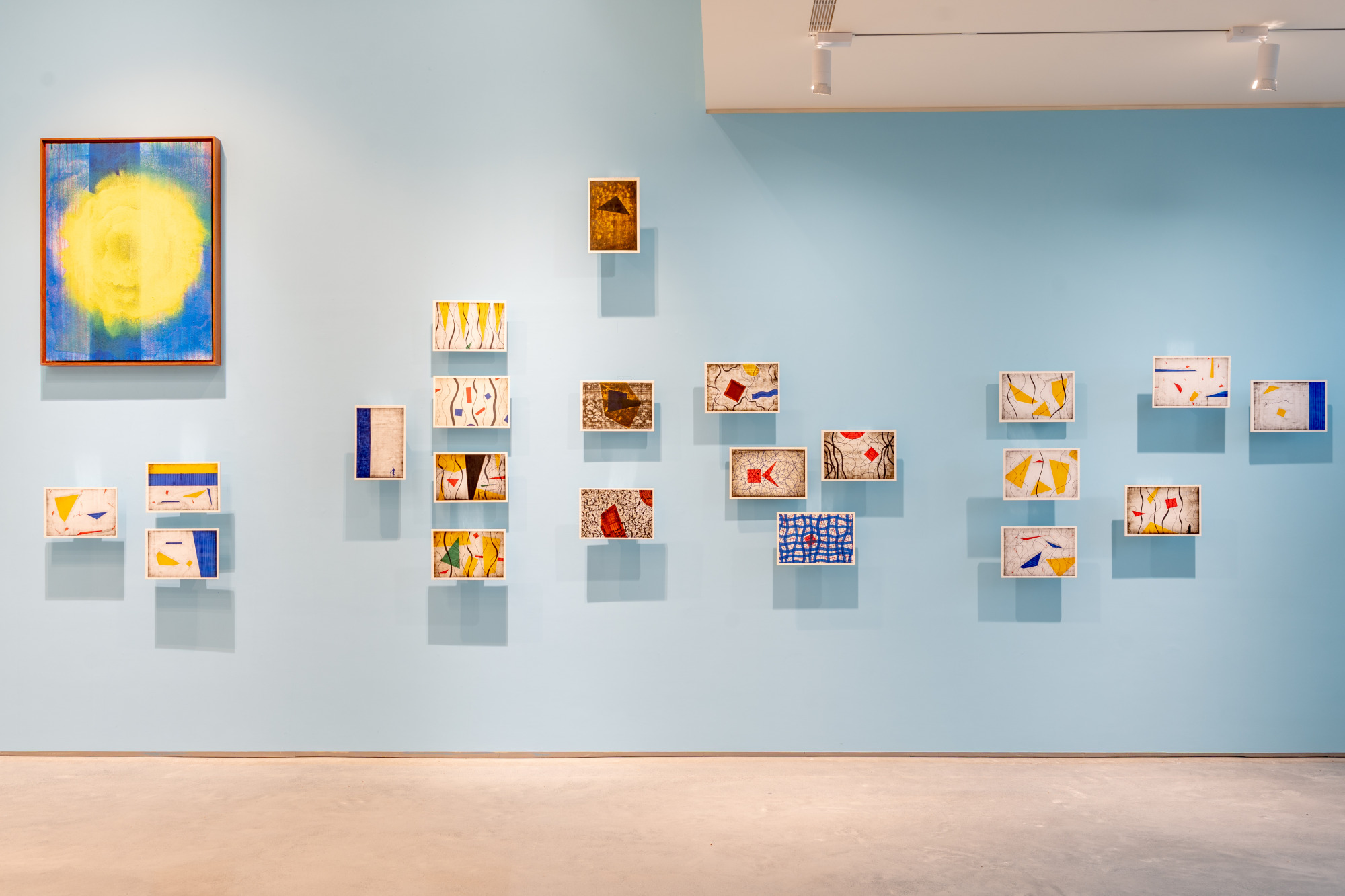
This European trip began with a short stay in Paris before moving on to Lisbon. To him, Lisbon was joyful - “yellow, sky blue, red, and a little green, and my work here has gone very smoothly. It feels wonderful, not tiring at all.” In the small studio, he worked diligently, creating new pieces every day. When his team later organized and counted the works, they discovered that in less than two months in Europe, Chiang had created more than one hundred pieces. During the exhibition period, the Sketches from Europe will be rotated, allowing visitors at different times to encounter new discoveries and impressions with each visit.
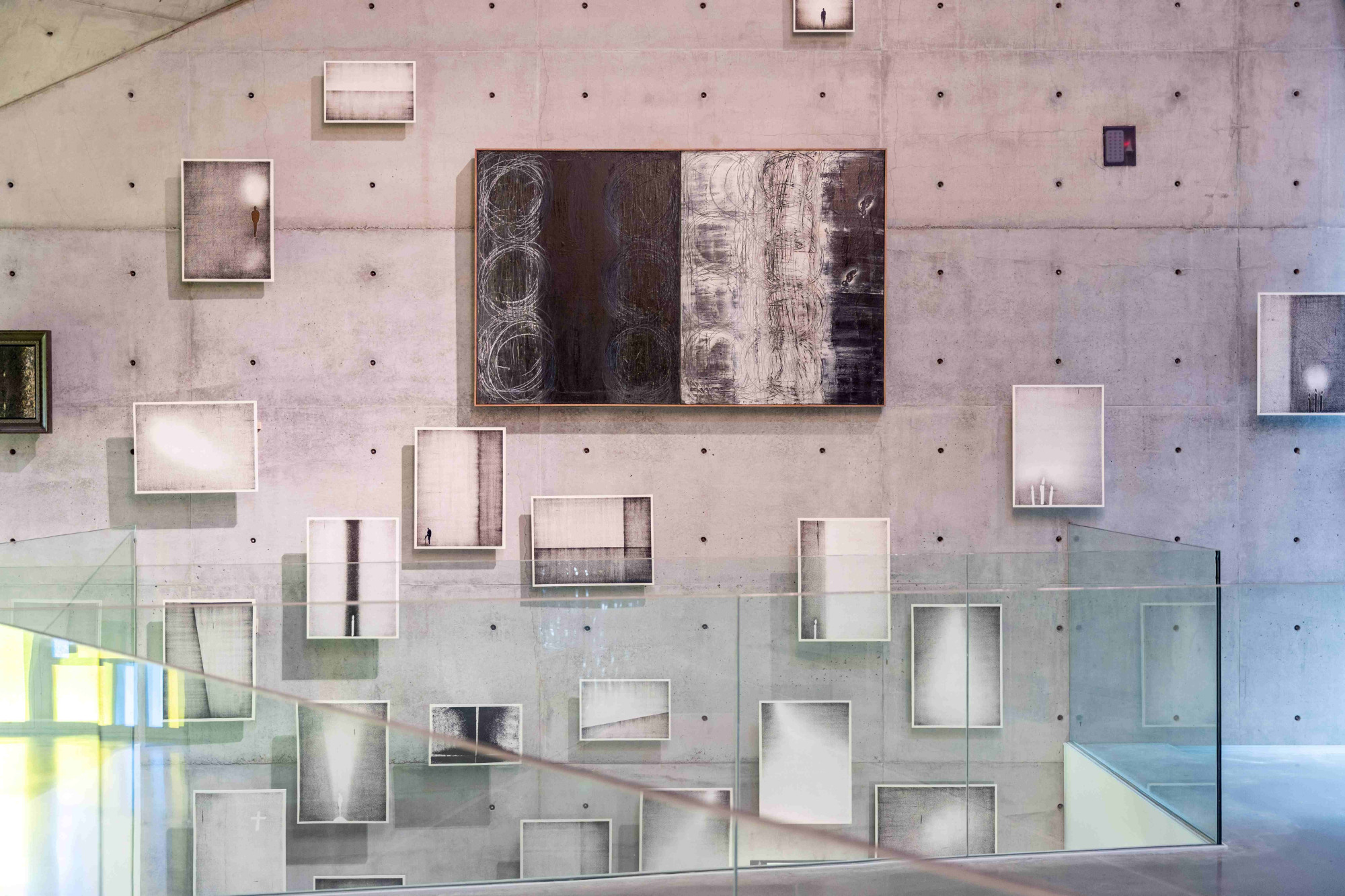
In this Sketches from Europe series, the gray tones carry a bright transparency, with compositions that feel more modern, simplified, and airy. These works also serve as a visual journal of Chiang’s time journeying through Europe fleeting thoughts from the heart and reflections on time, looking back at the past. The symbols of crosses, candles, and human silhouettes are fragments of memory and manifestations of the light of place. Presented in a new approach, these small works reveal Chiang creating with a lighter touch and a breath-like ease, as though opening the first lines of a poem.
“Just like a master craftsman who no longer mechanically repeats the same forms to make conventional furniture. During this period of creation, I let go of many things I once clung to and cared deeply about. I no longer push and refine a painting with the force and repetition of when I worked on the Hundred Year Temple series.” Chiang has often said that his works most directly reflect where he is and how he feels. In the Sketches from Europe series, one can sense his liberated and joyful state of creation, transforming more than half a century of artistic experience into creative energy that flows freely and boundlessly.
The Vibrant Energy of In the Garden of Light
After the opening of the Art Center, Chiang’s studio was transformed into an exhibition space, and he built a small temporary work area just 6.5-10m², barely enough to be called a space. Though modest and makeshift, it did not interrupt his creative rhythm. With the completion of the Art Center easing his mind, and spring arriving with chilly winds at times yet gradually warming, the flowing air carried the life force of Taitung. In his brushwork emerged bright yellows, fresh greens, tender reds, and deep blues – crystalline, luminous, and filled with the sudden brilliance of spring’s light.
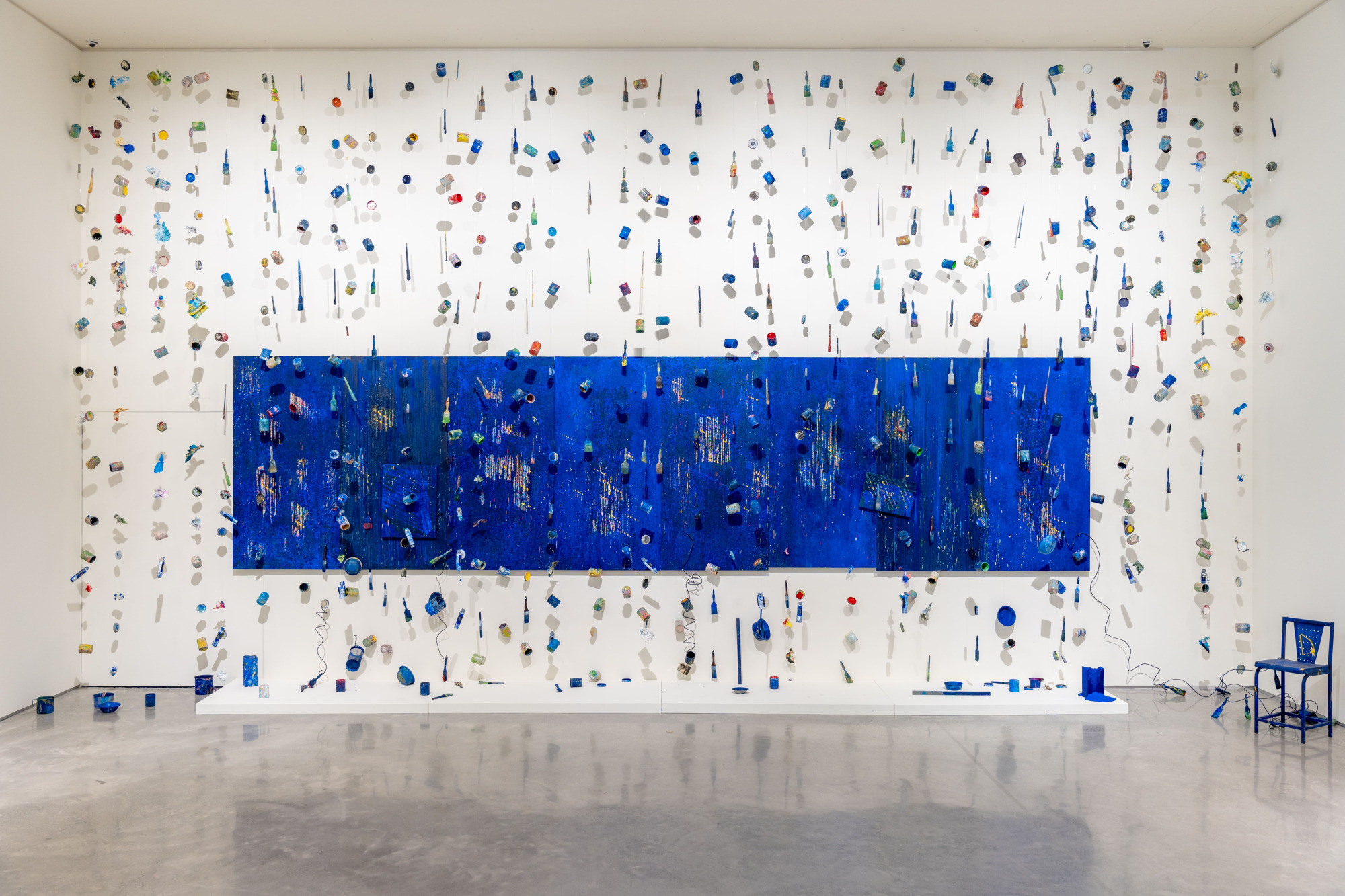
One of the works from the In the Garden of Light series, In the Garden of Light 25–80, was inspired by early mornings at the Art Center, when sunlight filters through the slender gaps between palm leaves and falls gently to the ground. Chiang created a rich Taitung blue on the panel, surrounded by essential tools such as brushes, paint cans, and instruments stained with color hung delicately like threads suspended from above, casting soft and varied shadows on the painting’s surface. This arrangement adds another layer of viewing pleasure, as though offering a sketch of Chiang’s daily life in Taitung.
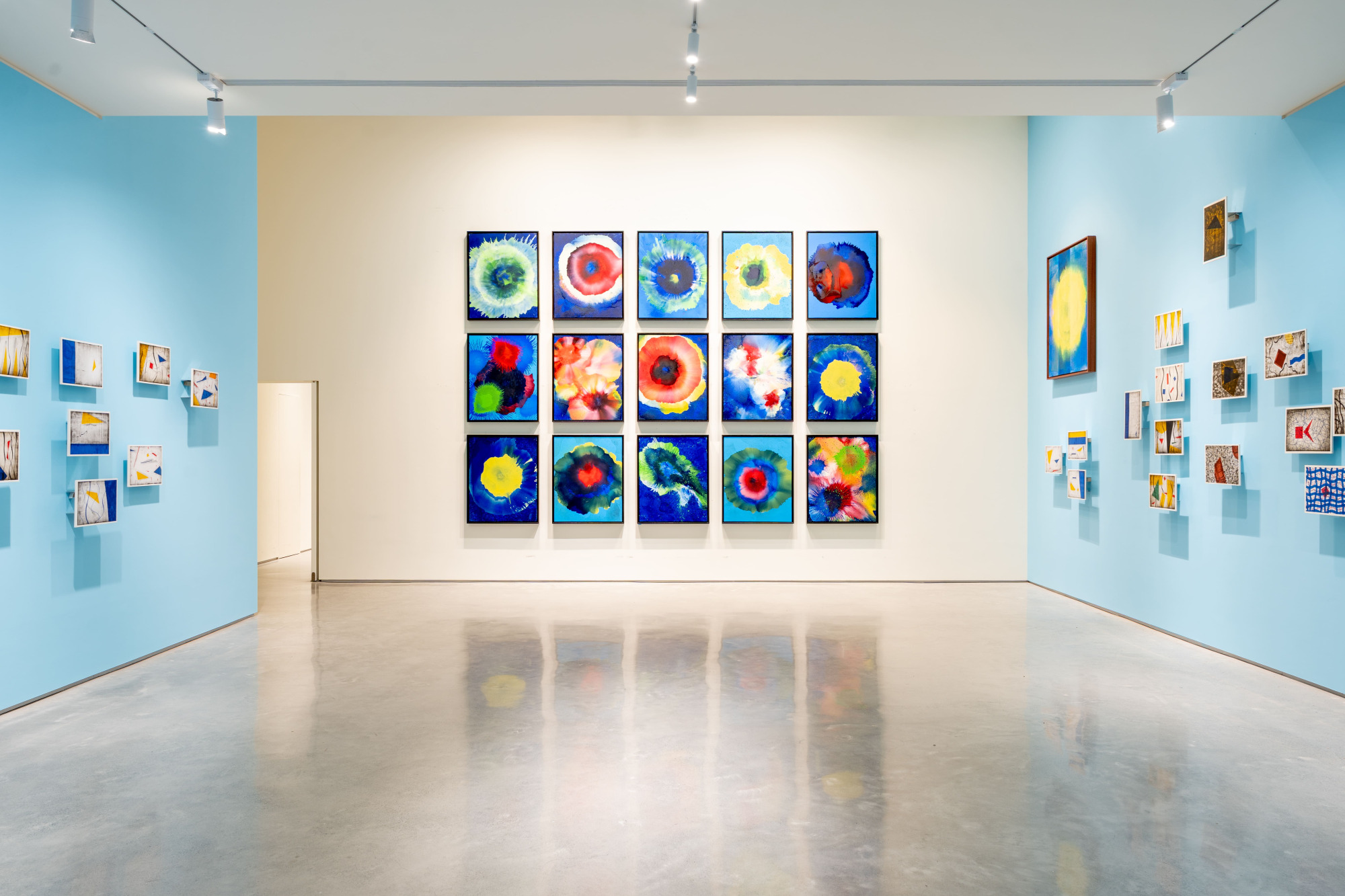
Each lively and spirited work in the In the Garden of Light series blends Taitung’s vivid colors and reflects the shifting scenes of its seasons. It is sea and mountain; it resembles wildflowers blooming by the roadside, and the moving vitality of ocean light and shadow. “These pieces appear simpler and more decisive in form, with many details stripped away,” Chiang says. “Most importantly, they reflect the feelings of my life in recent years – filled with powerful energy.”
“I will be able to keep creating until the very last moment”
The strength of Chiang’s creative drive may be hard for many to imagine. During the construction of the Art Center, work was in full swing with workers cutting, sanding, drilling, hammering; heavy machinery coming and going; dust everywhere; not a single peaceful day. Staff frequently needed to consult with him on countless large and small decisions throughout the building process. Even in such conditions, Chiang found moments between construction activity to settle his mind and create the Jazz - Jinzun series.
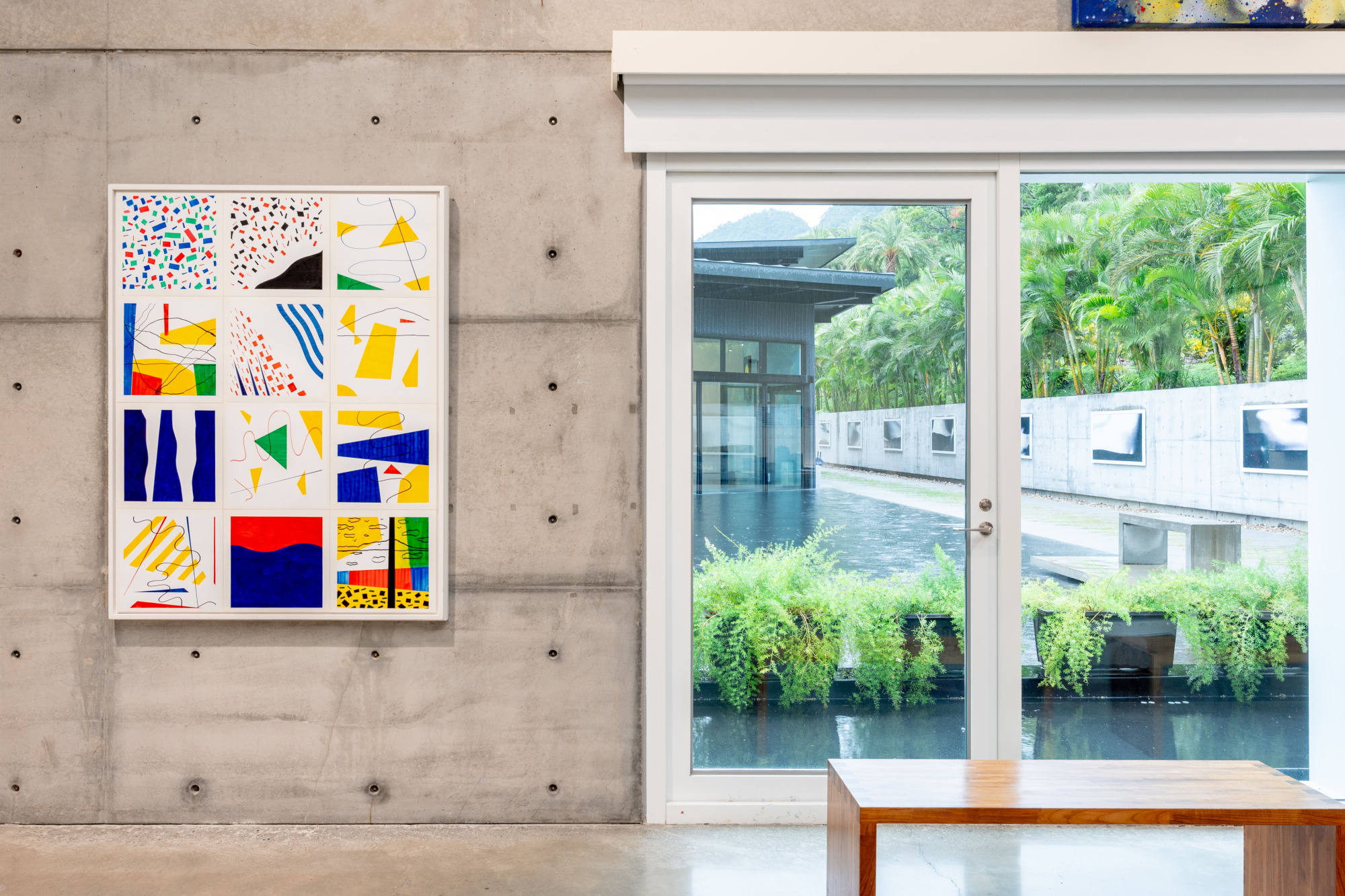
“The construction team often needed me to make decisions. If I had been working on my usual large canvases, I couldn’t possibly be interrupted at any time. But with marker drawings, I could stop whenever needed to discuss something, then return twenty minutes later and continue. That was the main reason I used markers during the construction phase.”
In the Jazz - Jinzun series, some works resemble fragments of life in Jinzun – cliffs, ocean waves, sunrise and moonrise while others are abstract blocks of vivid color. Just like the jazz that Chiang loves to listen to during his evening “happy hour” after a long day of work, the pieces are spontaneous, joyful, and free.
During the initial opening of the Art Center, selected works from the Jazz - Jinzun series were displayed in Café Debussy, and were also developed into exclusive art cards, tote bags, and other cultural and creative merchandise. Chiang recalls famed French artist Henri Matisse, who, even when he could no longer lift a paintbrush, continued creating with unwavering energy using cut paper to form uninhibited lines, bold colors, and compositions, sometimes pinning the colored paper directly onto the wall. Several of Chiang’s works carry a sense of tribute to Matisse. After experimenting extensively with marker works, Chiang expressed with emotion and optimism that when his own time eventually comes, “I know I will be able to keep creating.”
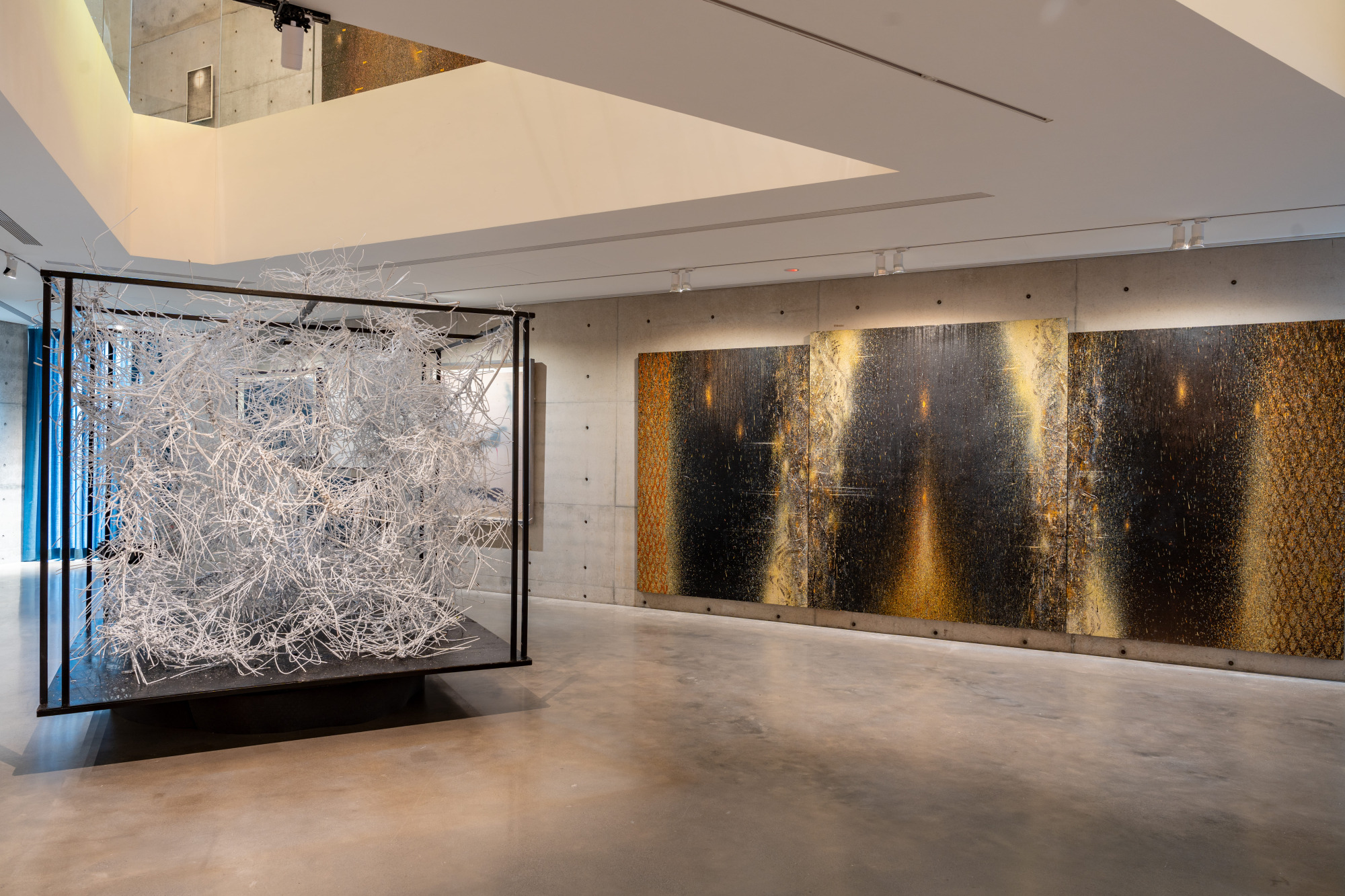
Jinzun - Transfigured Night Anchors the Cheng-Han Gallery — A Space Filled with Spirit and Sanctity
In late March 2020, the Taipei Fine Arts Museum presented Paul Chiang: A Retrospective, where the final gallery featured the kinetic sculpture Jinzun - Transfigured Night. Within a 2m² cube frame, countless strands of white wire intertwined in intricate, unresolvable layers. Paired with the extremely slow movement of Mahler’s Symphony No. 5, second movement in a darkened, silent space, the sculpture glowed, moved continuously, and rotated slowly almost as if it were alive. In this new exhibition, the work returns to anchor the Cheng-Han Gallery (Gallery 3), and in the soaring double-height space, accompanied by Mahler’s music, it seems to move even closer to the innermost spiritual dimension of Chiang’s being.
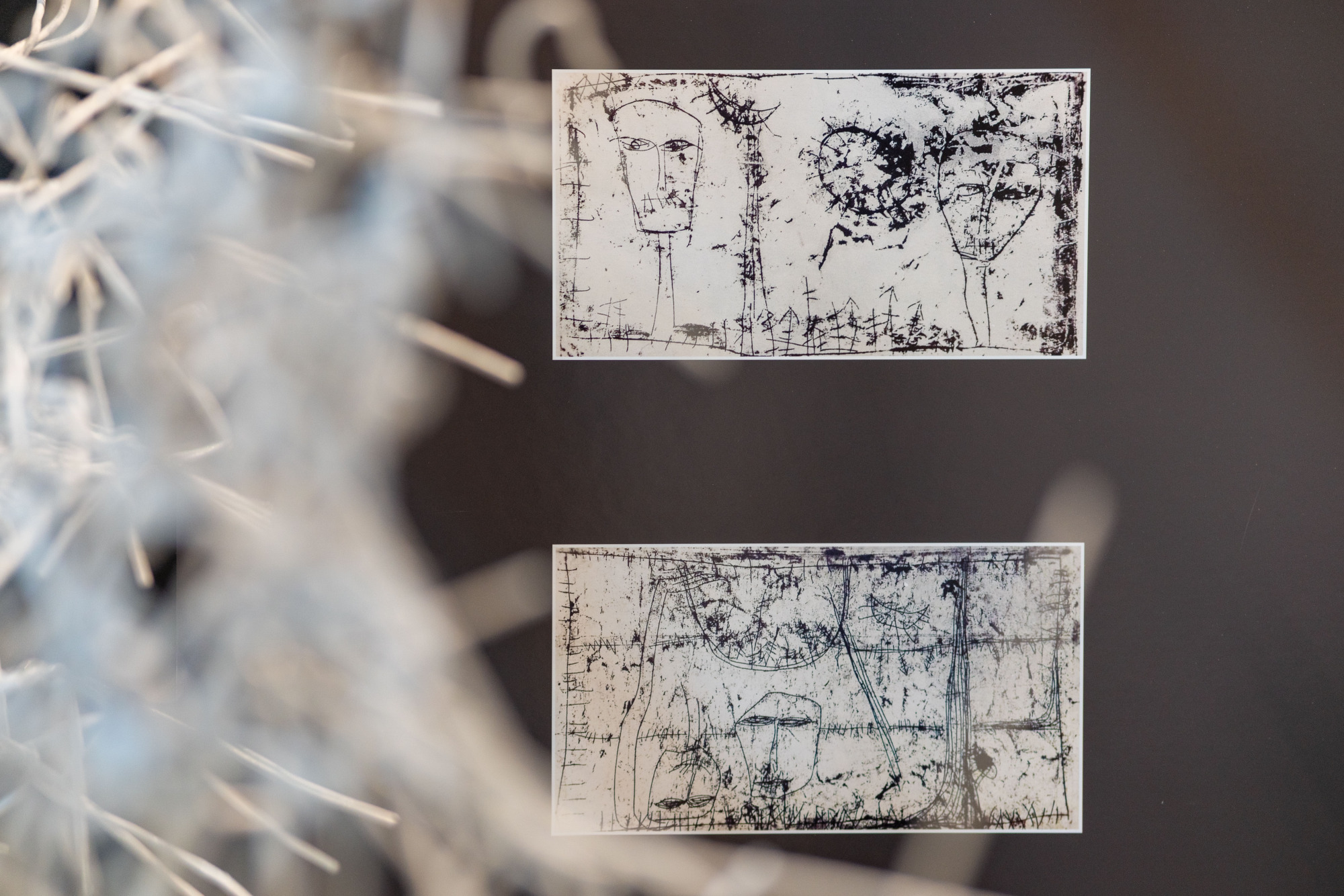
Also exhibited in the Cheng-Han Gallery are Search and Lost, works from Chiang’s very first solo exhibition. Through these two pieces, one can look back at the quiet pain and melancholy of his early creative life. Though sharing the same wire imagery, in his youth the wires were violently wrapped around faces, marked with nail holes and stitches. Now, by contrast, they have become like eternal, self-rotating stars bathed in the warm Taitung sunlight and sacred music—as if the artworks themselves are offering comfort to the young artist’s once-imprisoned spirit.
Living in an Era Graced by Art
Since the opening of the Art Center, visitors from around the world who admire Chiang’s work have found their way to Taitung. The Paul Chiang Arts & Cultural Foundation has also hosted concerts, live performances, and various events at the site, inviting audiences to engage with Chiang’s art in diverse ways and discover new layers of enjoyment with every visit. Throughout this time, as crowds flowed in without pause, the most frequent feedback Chiang and his team received was heartfelt gratitude for creating such a world-class art center in Taitung.
Chiang recalls that one day, while he was discussing work with colleagues at the café, a young lady, likely just out of university, sat quietly alone in a corner. Out of respect for Chiang’s working moment, she did not approach him. But before leaving, she walked past where he could see her, lifted her phone, and on the screen in large letters were the words, “I feel so lucky to live in the same era as you. Thank you, Mr. Chiang.”
He creates when busy, creates when resting, and continues to create through hardship and joy alike. Even after completing the monumental task of establishing the Art Center, he never set aside his brushes. Instead, he went on to realize new masterpieces such as In the Garden of Light and Sketches from Europe, reaching a new peak only to climb further still.
The Fall 2025 exhibition awaits your return to Taitung.
Written by: Hui-Ling Huang
Photography by: Jia Ching Lin
❏ This article also appears in our bimonthly e-newsletter. We invite you to subscribe to the Paul Chiang Arts & Cultural Foundation e-newsletter. Each issue features not only a cover story like this one, but also updates on upcoming events and a glimpse into Paul Chiang’s creative journey. We hope these stories bring a touch of light to your life.