By Wu Chin Hsun (Author of Paul Chiang’s Biography)
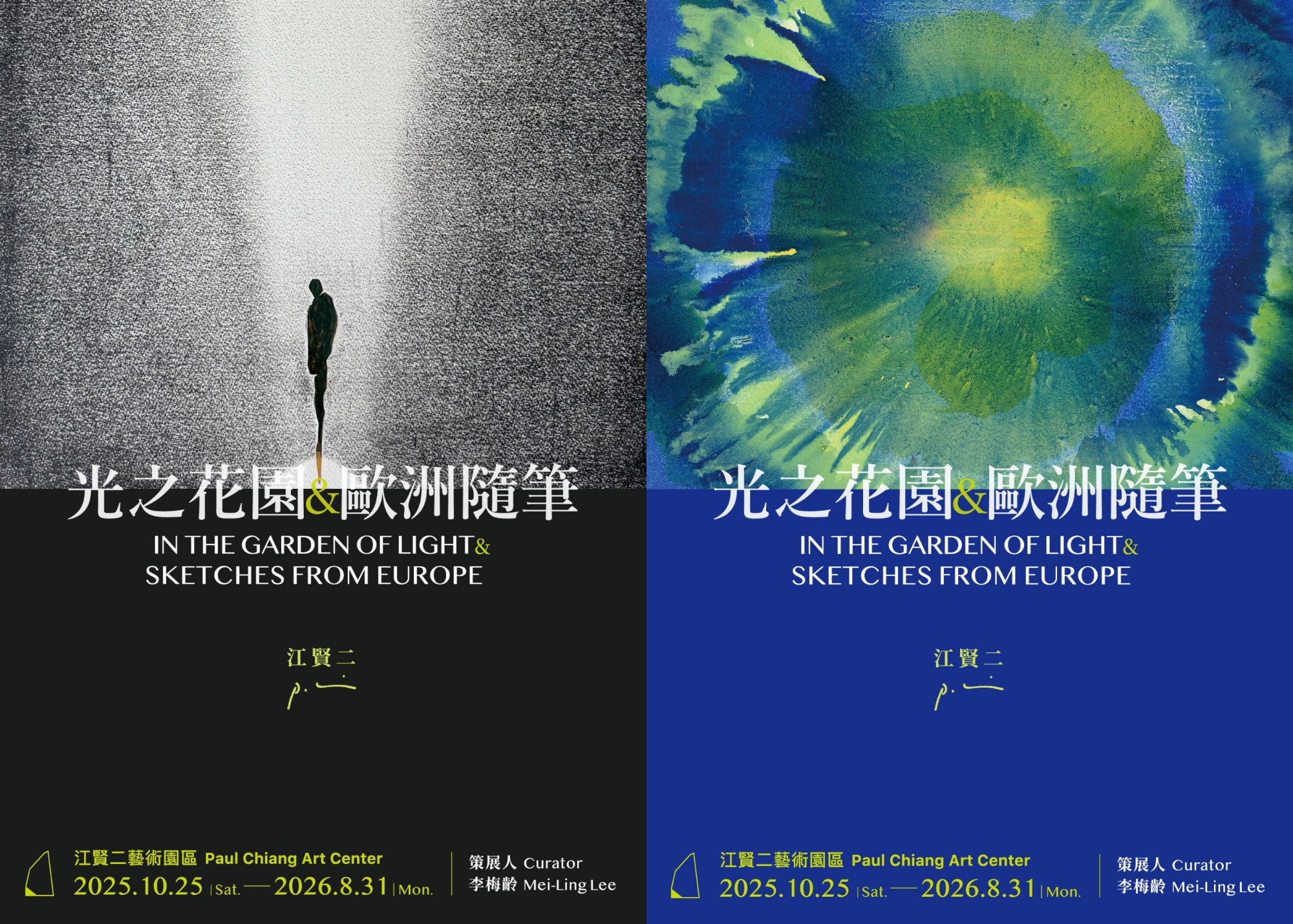
At the end of October, 2025, the Paul Chiang Art Center in Taitung held its Autumn Exhibition, curated by Lee Mei-Ling, Honorary Director of the Art Center. The exhibition brought together Paul Chiang’s most recent bodies of work created in Taitung, Paris, and Lisbon—Sketches from Europe, In the Garden of Light, Songs Without Words, and Jazz / Jinzun—alongside the powerful new work Meditation on Eternity (For Hualien 9.23). Together, these works reveal the remarkable creative vitality of the eighty-three-year-old artist, whose energy shows no sign of waning.
Sketches from Europe: A Tale of Two Cities in Color and Light
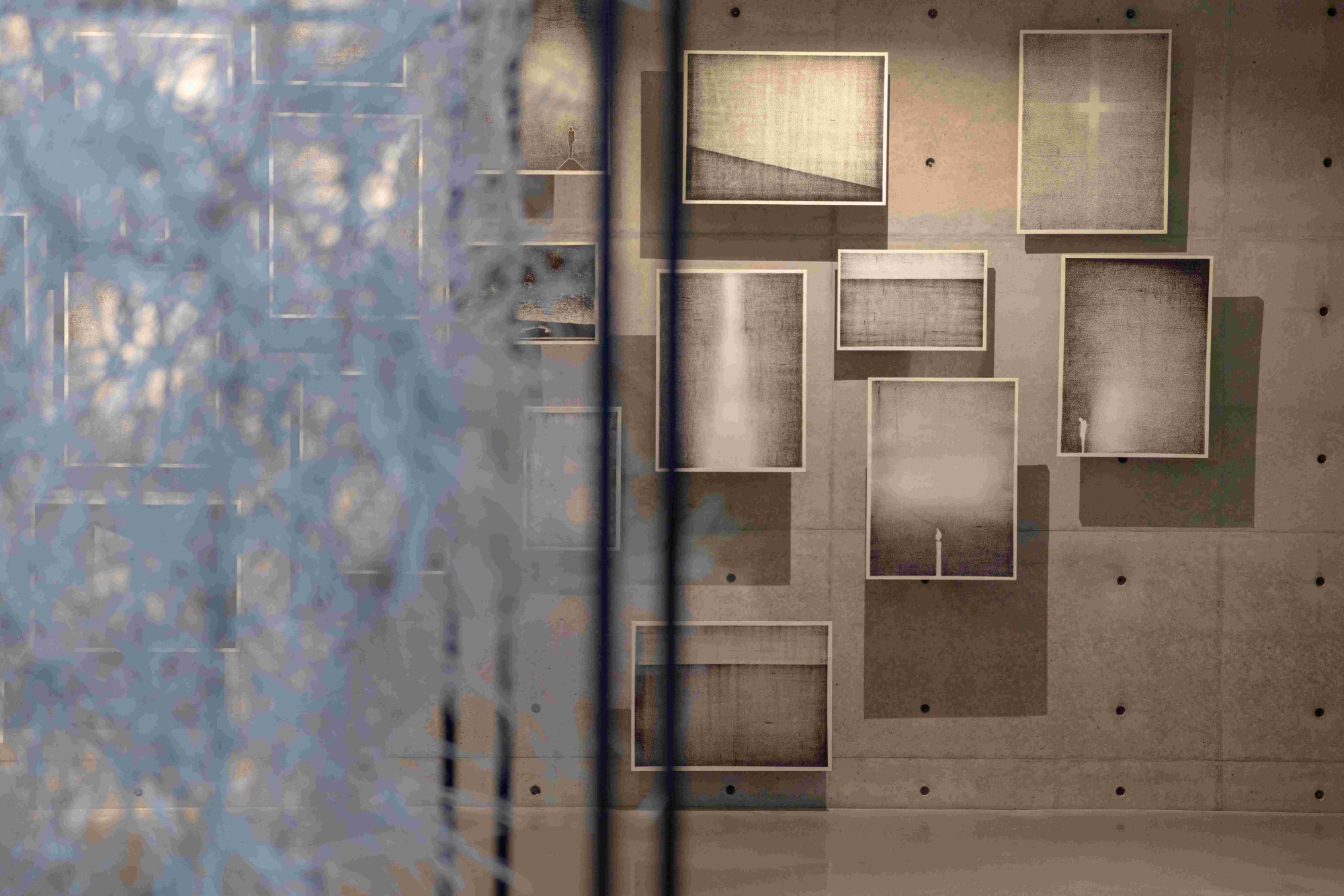
During the summer, Chiang spent time in Paris before settling in Lisbon for two months. Overwhelmed by Paris’s intensity, he found in Lisbon a slower rhythm and a luminous clarity reminiscent of Taitung. There, he produced more than a hundred small works—intimate visual notes he collectively titled Sketches from Europe.
Works created in Lisbon tend toward pale grays and subtle colors, imbued with transparency and air; those from Paris are denser, often in black and white, carrying a quiet longing for stillness. Using oil sticks on coarse paper, Chiang captures minute vibrations of light. Shadows, minimal geometries, and restrained tonal shifts evoke solitude, memory, and silence—less melancholy than contemplative, as if sorrow has already turned the page toward calm.
Songs Without Words: Counterpoint and Tension
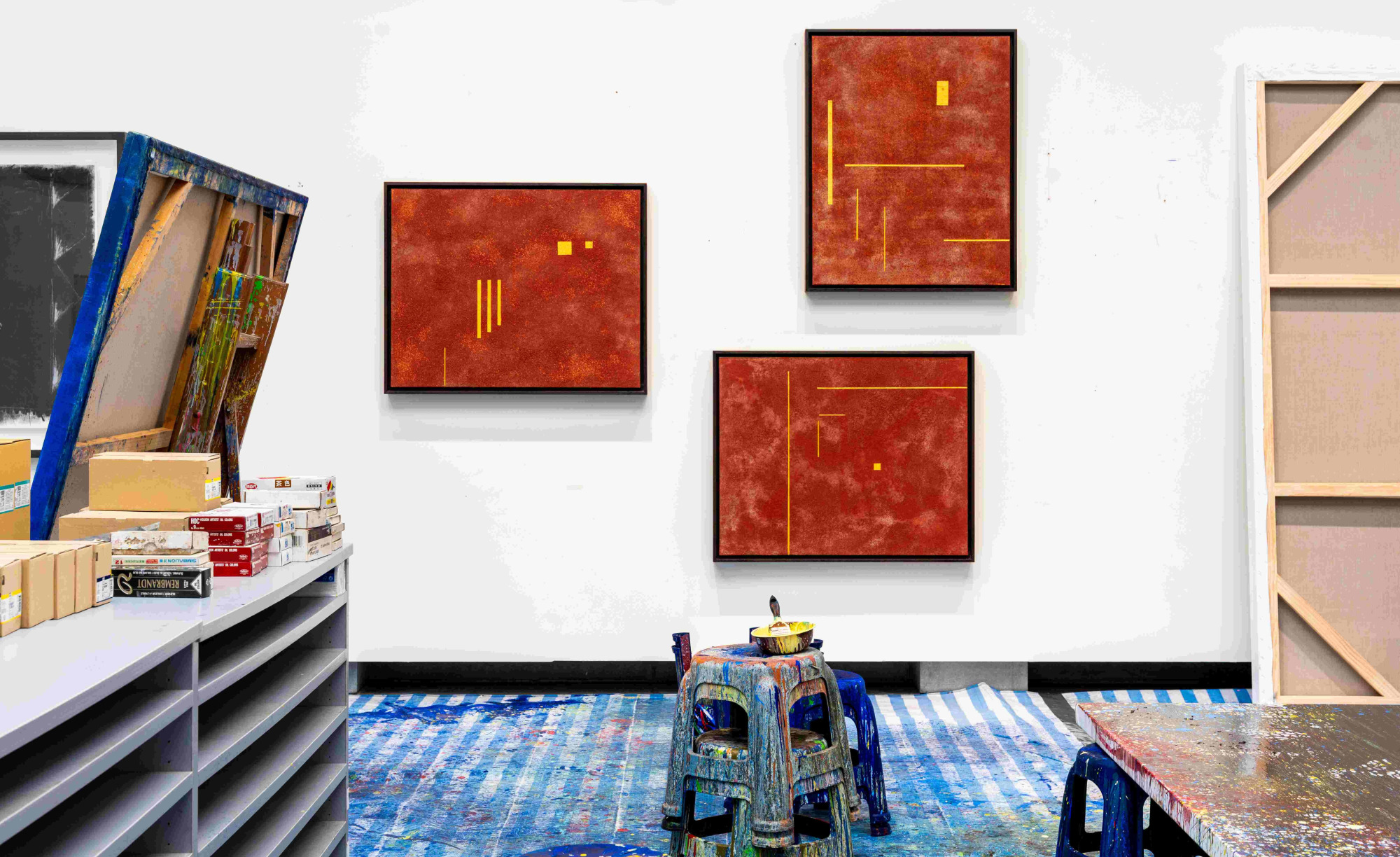
Before traveling to Europe, Chiang created a new series of Songs Without Words, reconnecting with a creative thread that began over thirty years ago in Long Island. The original work, inspired by Felix Mendelssohn’s piano pieces of the same title, embedded sand from the shoreline into the painted surface, combining raw materiality with restrained structure.
In the new series, fine sand—this time sourced from the Art Center’s own grounds—is again mixed into the surface. Brick-red, rust-like tones dominate, intersected by precise gold lines or blocks. The tension between formless ground and geometric order echoes the paradox suggested by the title itself: “song” without language, emotion without narration. These works unfold as silent music, inviting the viewer’s imagination to complete them.
In the Garden of Light: The Direct Bloom of Energy
The most striking new body of work in the exhibition is In the Garden of Light. Immersed in Taitung’s crystalline summer light and expansive night skies, Chiang entered an unusually intense creative surge. “Simply put,” he says, “it’s energy.”
Here, light becomes concentrated, explosive, and fluid. In some works, color and form cluster tightly, producing vivid contrasts and ambiguous imagery—suggestive of flowers, mist, cells, or cosmic nebulae, yet never fixed. In others, light expands into atmospheric fields, layered and diffused, evoking breath, water, and dreamlike states.
One large work integrates studio objects—brushes, palettes, paint cans—transforming the act of painting itself into part of the “garden.” Throughout the series, Chiang embraces uncertainty, allowing intuition to lead. As he puts it: “I’m not painting flowers. I’m painting Taitung’s light, air, and nature.”
Jazz / Jinzun: The Swing of a Liberated Soul
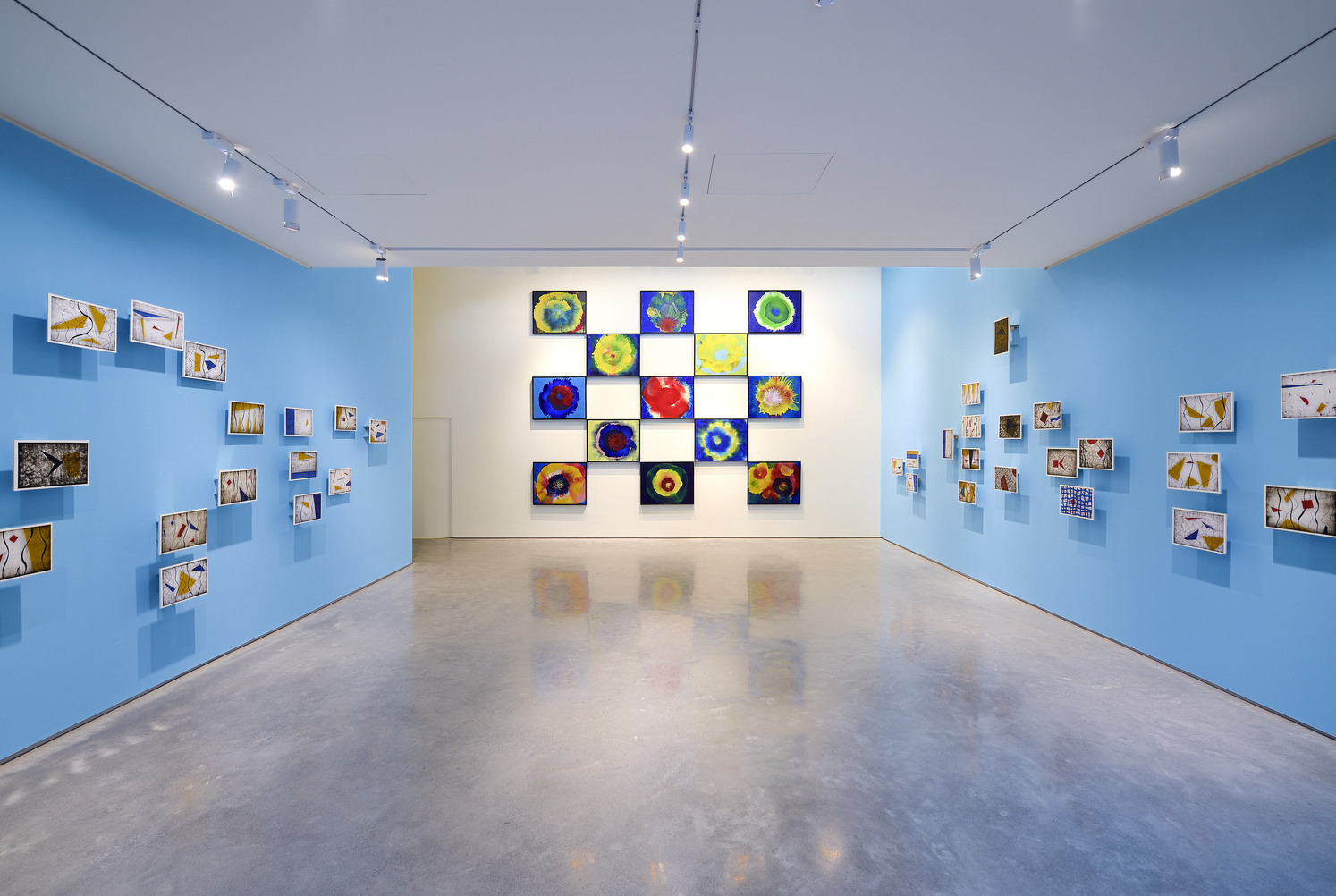
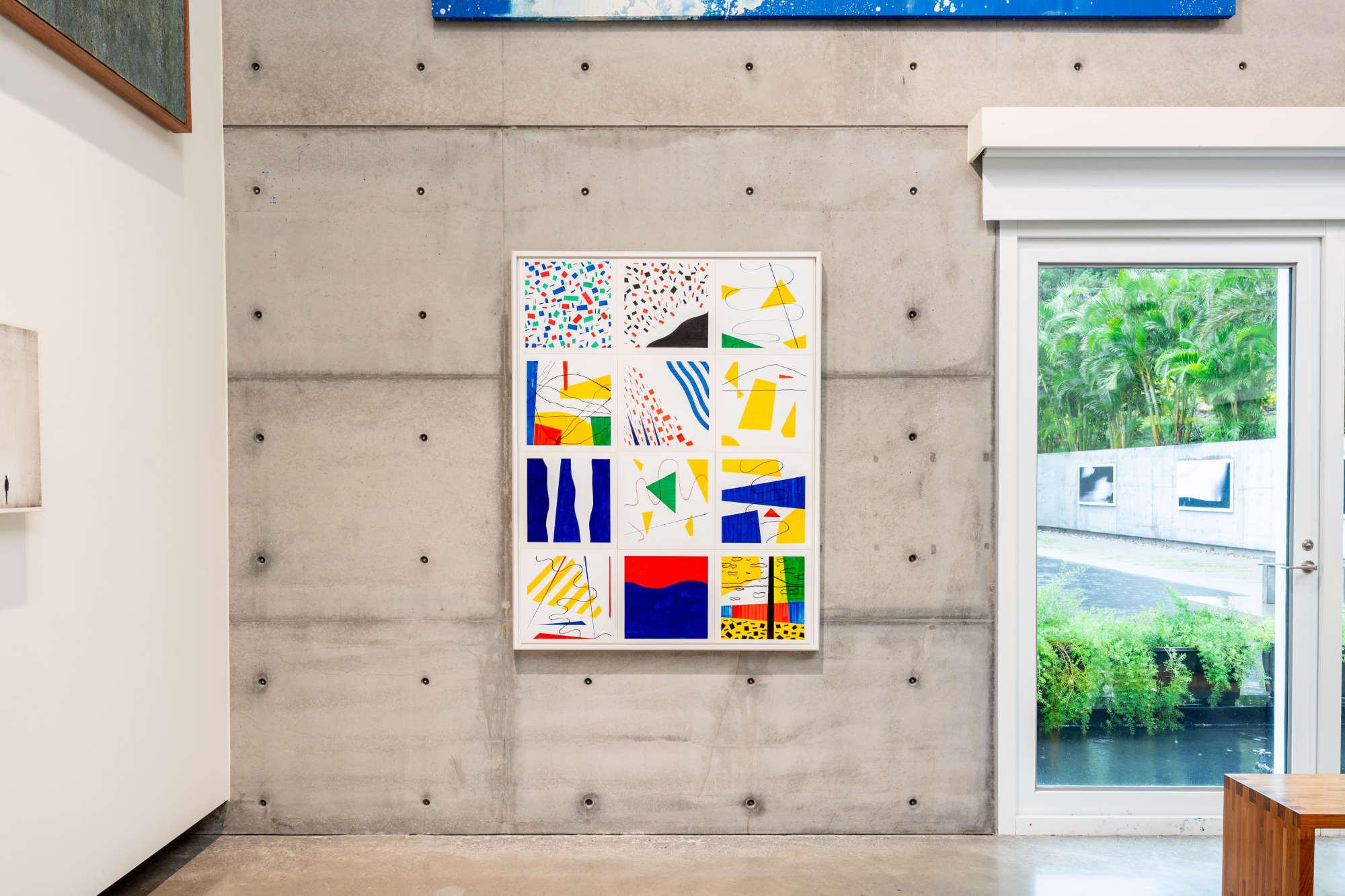
In Jazz / Jinzun, shown publicly for the first time, Chiang reveals a shift not only in form but in attitude toward life. As his musical interests have expanded—from Bach to jazz, chanson, and contemporary pop—his visual language has grown freer and more playful.
Created during periods when his studio space was limited, these works were made quickly and intuitively. Over time, they coalesced into a lively constellation of images that seem to converse, improvise, and swing together. Their bold colors and rhythmic forms recall the late cut-outs of Henri Matisse—works that, despite physical constraint, radiate joy, movement, and clarity.
Meditation on Eternity: Compassion as Conviction
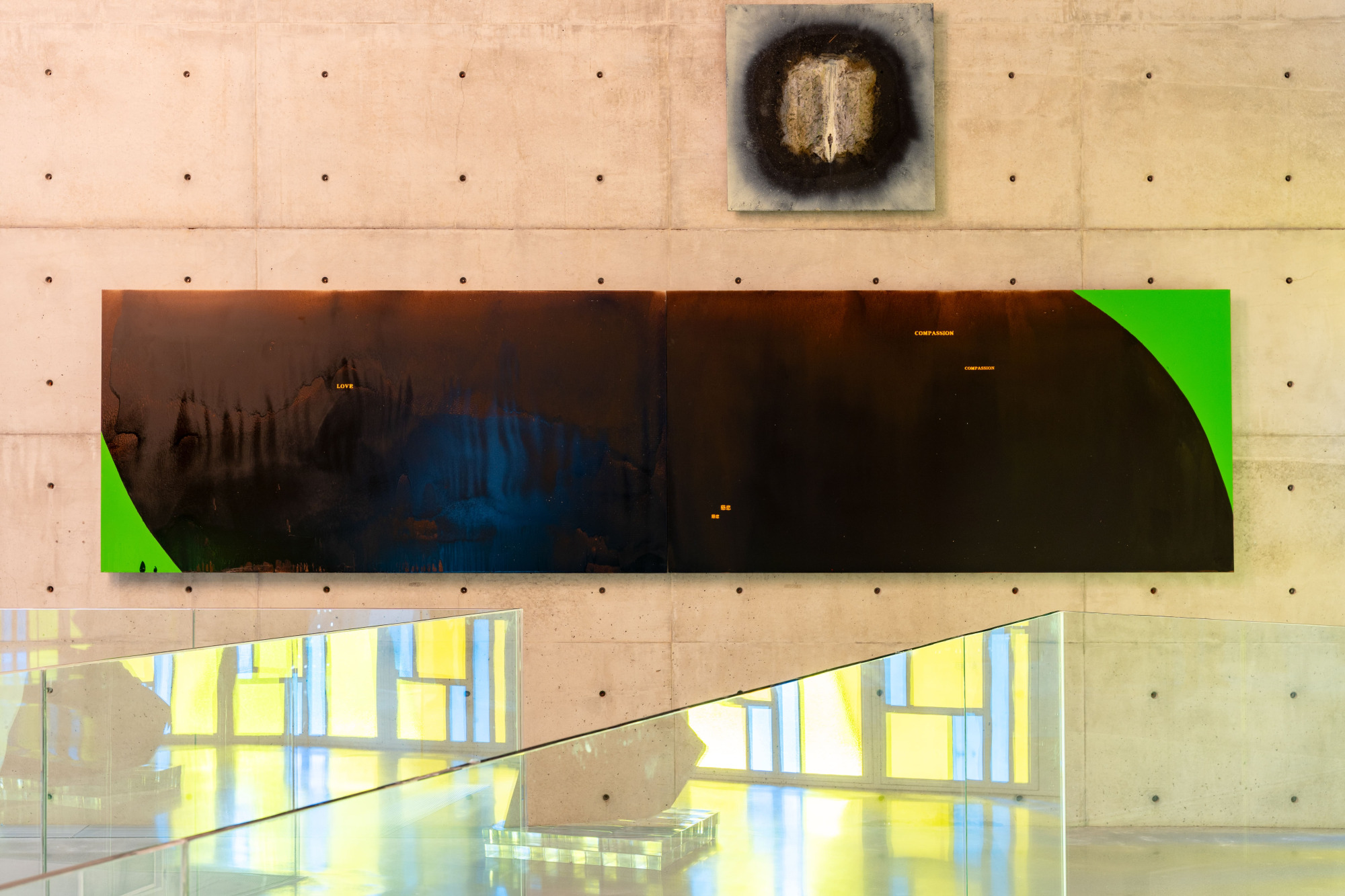
Deeply affected by the devastating floods in Hualien on September 23, 2025, Chiang created Meditation on Eternity (For Hualien 9.23). Spanning nearly five meters, the work confronts the viewer with a vast field of darkness, punctuated by the repeated golden words “COMPASSION” and “慈悲.”
Compared to his earlier disaster-related works, this piece is simpler and more direct. Amid overwhelming darkness, compassion appears as a fragile yet unwavering light—affirming that love remains the sole conviction even in the face of catastrophe.
An Open Clearing
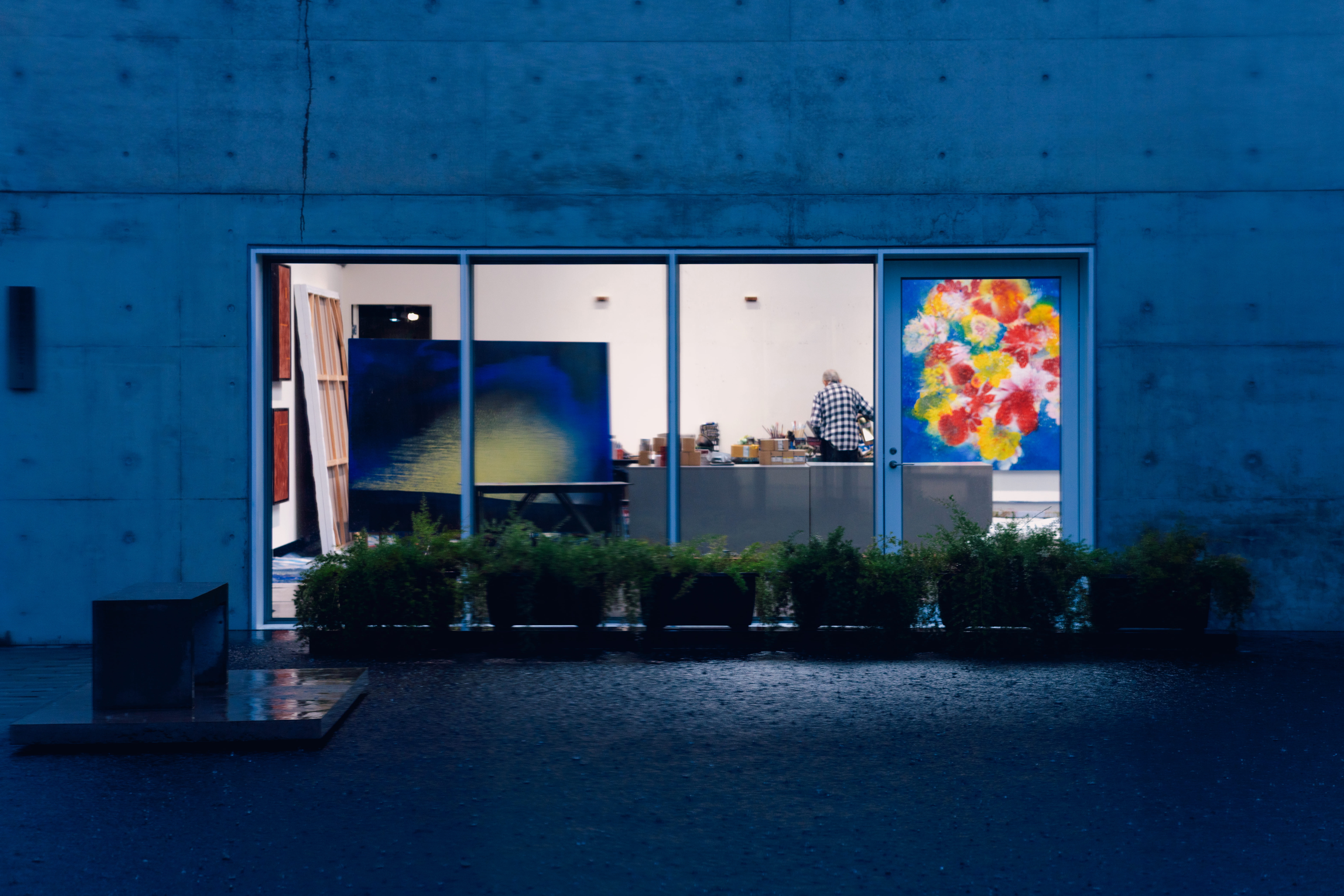
During the exhibition, Chiang opens his studio to the public, revealing the living reality of artistic creation: unfinished works, tools, traces of labor. This gesture marks a profound shift for an artist who once painted behind closed windows for decades.
Today, the Art Center itself becomes an open “clearing”—a space where art, environment, and viewers intersect. Here, creation is not an isolated act but a shared experience, sustained by attentiveness, care, and resonance.
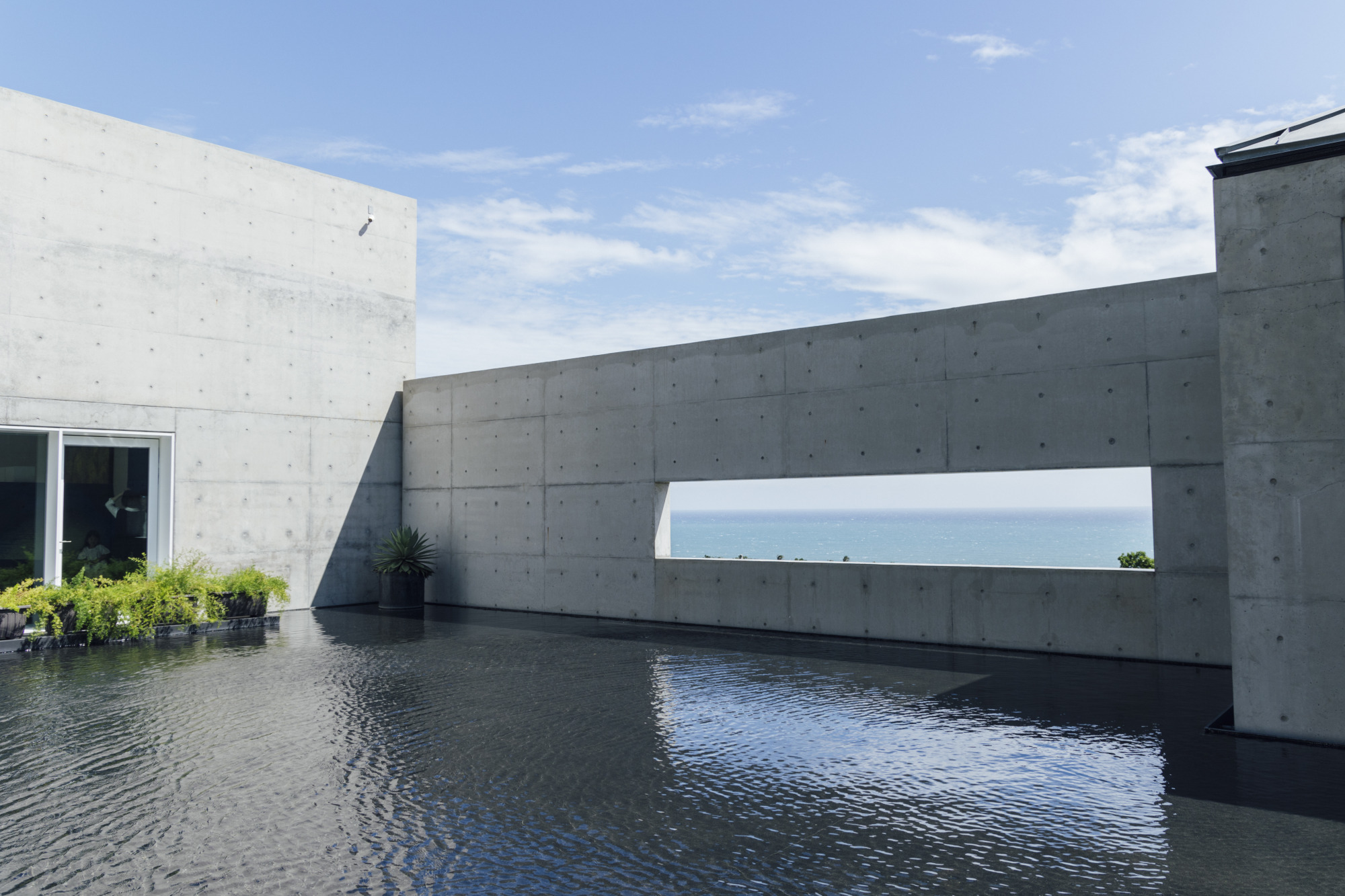
Like the Serenity Pond at the heart of the Art Center—quietly reflecting sky and clouds without grasping them—Paul Chiang’s work unfolds as a poem of light, energy, and presence.
❏ This article also appears in our bimonthly e-newsletter. You’re warmly invited to subscribe to the Paul Chiang Arts & Cultural Foundation newsletter. Each issue features a cover story, updates from the Art Center, and moments from Paul Chiang’s daily creative practice. We hope these shared stories add a touch of light to your life.
In the Garden of Light & Sketches from Europe
2025/10/25 — 2026/8/31
Open Wed–Mon (closed Tue)
10:00–17:00 (last entry 16:30)
Lunar New Year Closure: Feb 15–19
Book 1 day in advance & save 20% general admission.