By Jenning King
On a winter morning in 2026, I boarded a small propeller plane in Taipei. Within minutes, the city’s damp gray air gave way to open sky as we followed Taiwan’s eastern coastline southward. About an hour later, the aircraft descended through drifting clouds into Taitung — often described as “Taiwan’s last pristine landscape.” Sunlight glinted sharply off the Pacific. On one side, the ocean stretched wide and blue; on the other, the Coastal Mountain Range rose in quiet layers.
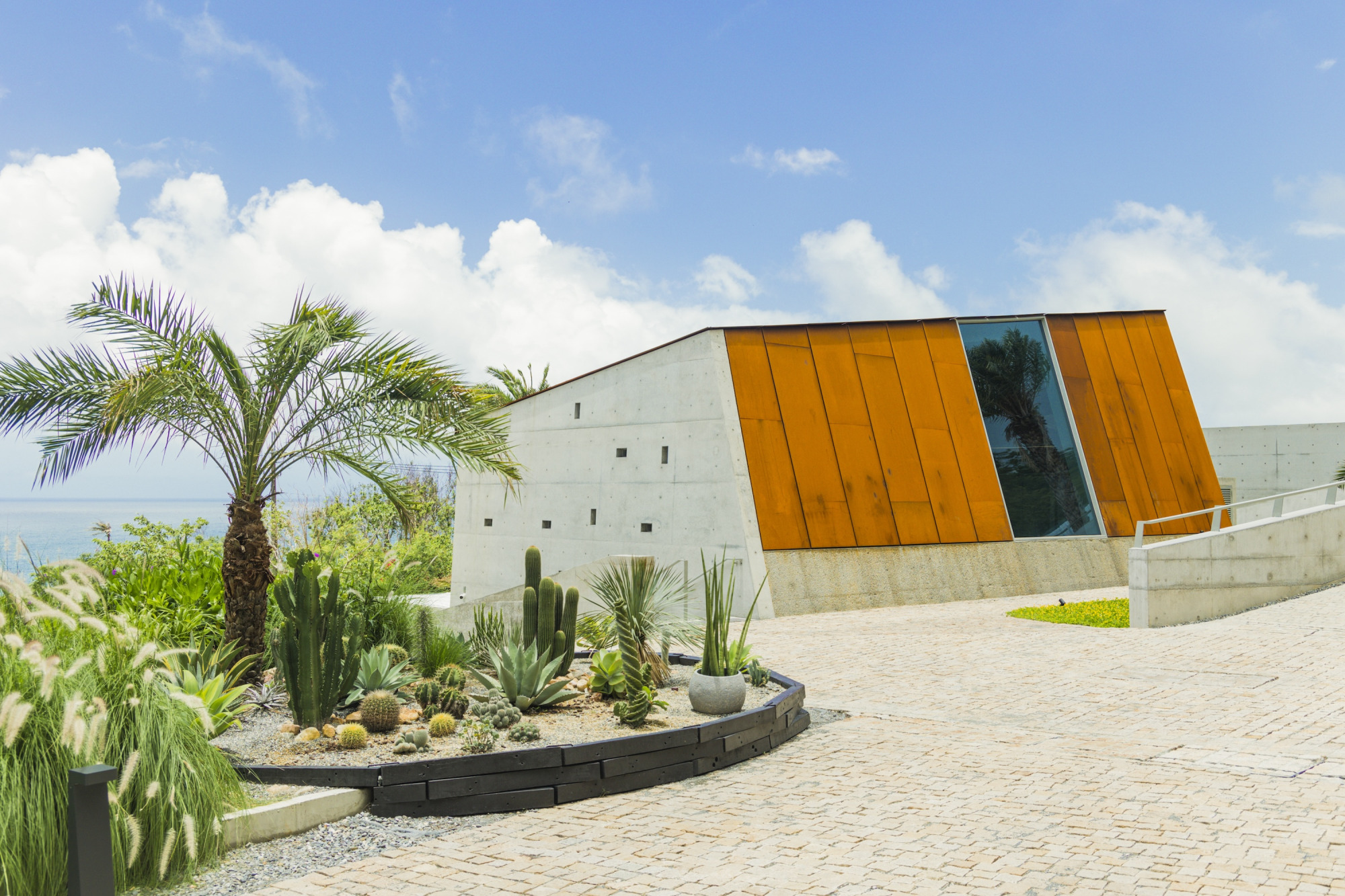
Between mountain and sea, in the quiet village of Jinzun, stands the Paul Chiang Art Center.
In March, the Art Center marked its first anniversary. Within just one year, it has already become a meaningful destination on Taitung’s cultural map — a place where people come to meet nature, art, and their own inner stillness. Although it sits in Jinzun, a relatively remote area in Taiwan, the Center has welcomed nearly 100,000 visitors since opening, reflecting a deep desire for artistic experiences that breathe in rhythm with nature.
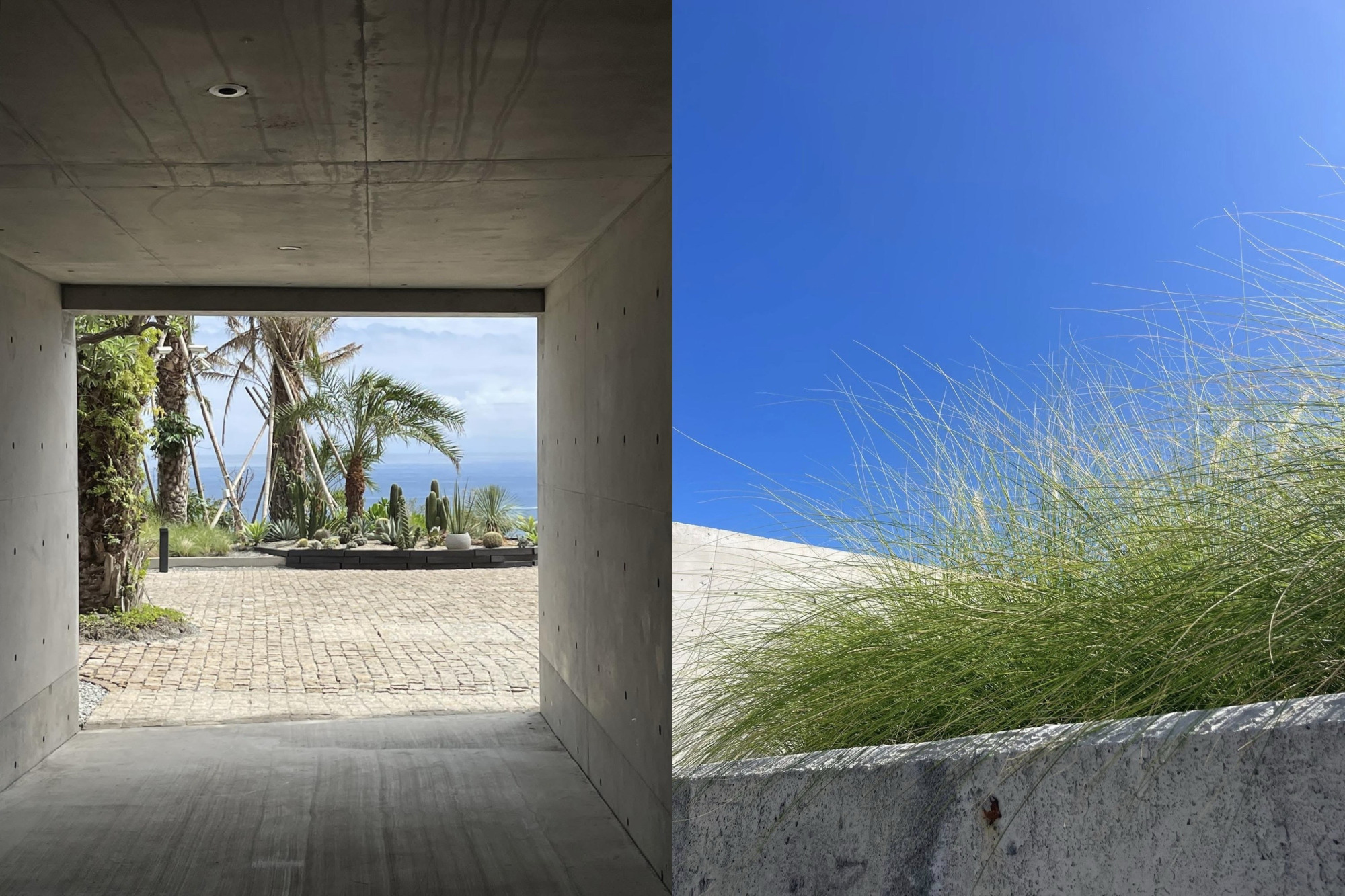
Stepping into the grounds, visitors are first greeted by an expanse of green — a planted landscape open to the sky, an outdoor exhibition space created jointly by the artist and the natural world. “I want to create together with nature,” is how Paul Chiang describes the origin of the Art Center. Here, artworks are sculptures and plants, composed together with the surrounding mountains and sea, the wind and light, forming a dynamic exhibition field that shifts continually with time, weather, and season.
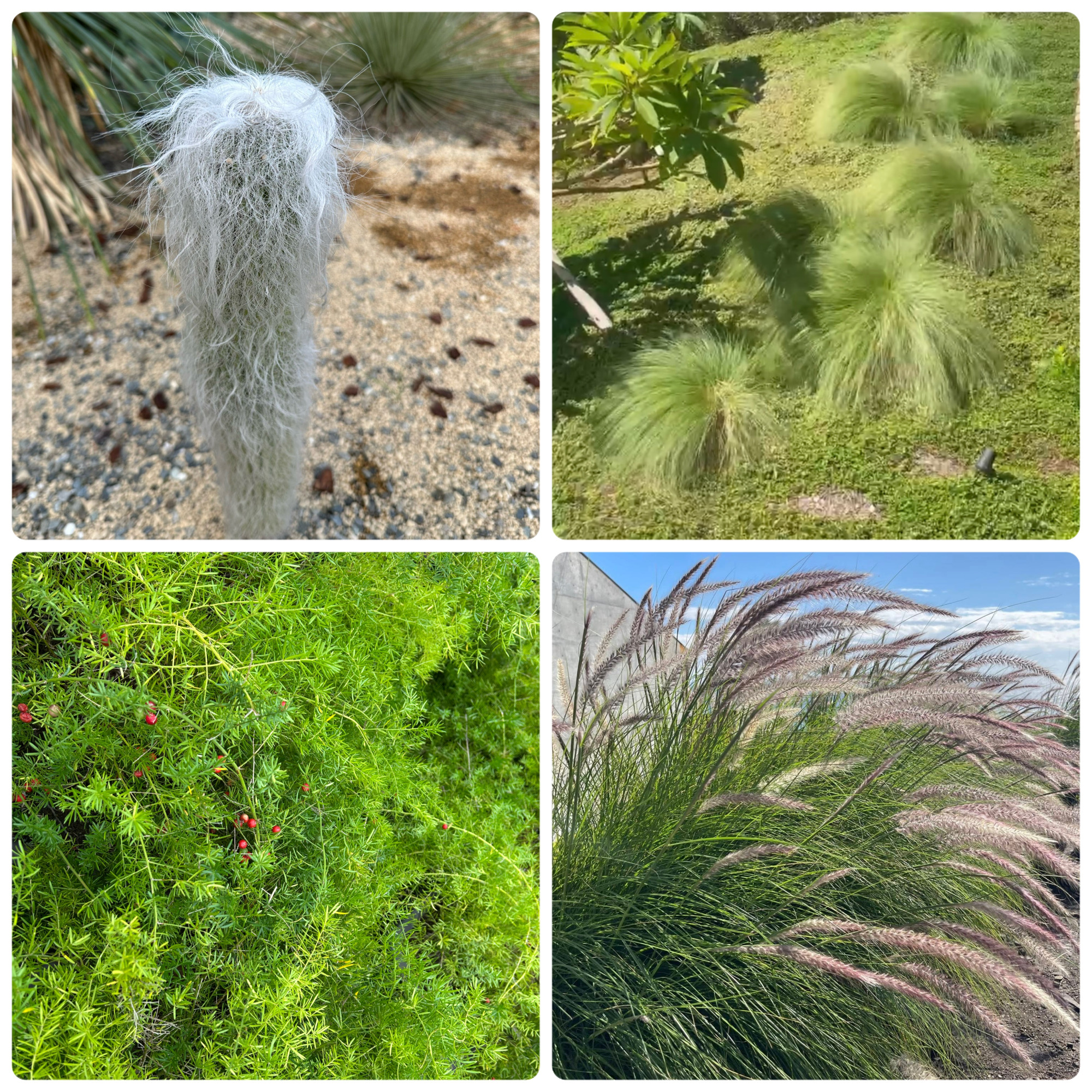
The land that was once steep, damp, and strewn with rocks has completely transformed. Working with horticulturalists, Chiang has planned more than 47,000 ground-cover plants — including love grass, fountain grass, purple fountain grass, peanut vines, Eupatorium, Ruellia, and more — all now flourishing. When first planted, the native Taiwan creeping fig saplings were only three inches high, yet even on steep slopes they have spread in layers, weaving a vast green carpet. The fountain grasses, with their drooping flower spikes rising and falling in the wind, embody another quiet and leisured way of life.
Chiang describes them this way: they may look small and humble, but their regenerative power is strong, their resilience remarkable; even in harsh environments they survive and bloom on schedule — a life force worthy of our respect.
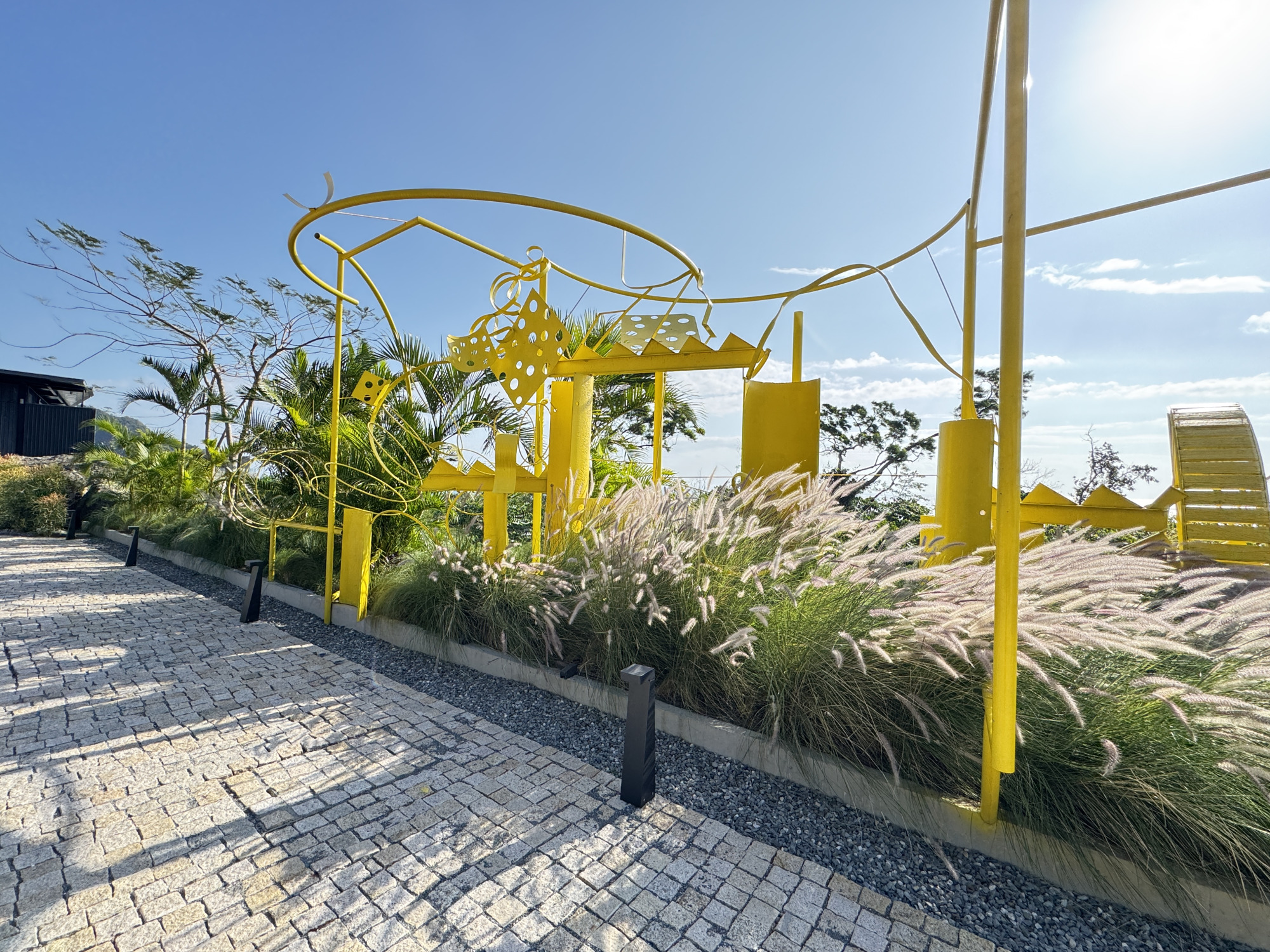
In the artist’s eyes, these seemingly ordinary plants — including the cacti in the succulent garden, unafraid of sand and wind — carry a tenacious and unyielding vitality. With astonishing adaptability, they endure the cycle of the seasons and occasional extreme weather, taking turns to dress the grounds in different moods throughout the year. In the coming summer, for instance, flame trees will cover themselves in fiery red, brightening the landscape, while nearby frangipani — symbolizing hope and renewal — will send a gentle fragrance drifting on the breeze.
Among the clusters of Eupatorium flowers, Chiang is delighted to encounter purple crow butterfly and blue tiger butterflies, drawn here in search of nectar. They treat this place as a temporary resting station on their migratory route, pausing to replenish their strength. Thanks to the rich ecology and sound conservation of soil and water, the Art Center is gradually becoming a habitat that nurtures and attracts a wide range of life.
When artworks return to nature, the way we see them changes
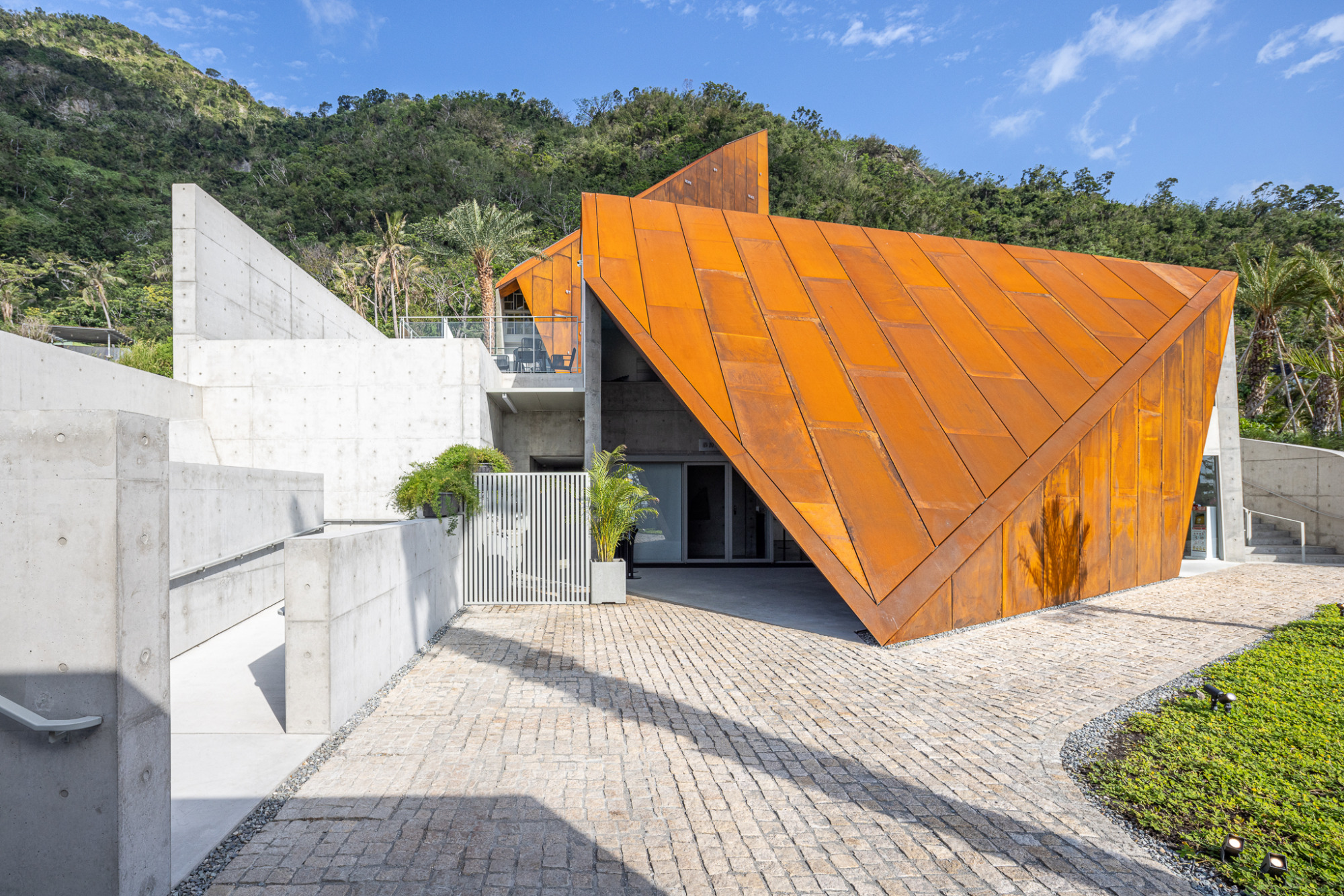
Entering such a place, the mind — once restless — gradually grows calm. From the reception center to each exhibition hall, the buildings and plantings echo one another, unfolding along the natural contours of the land in forms that are simple and quiet. Whether inside the galleries or walking outdoors through the grounds, one often sees people lingering, unhurried, taking in art, nature, and architecture together.
Moving through the Art Center — indoors and outdoors — one experiences art at a slower cadence. Early works born in solitude and introspection gradually give way to paintings infused with expansive light. The viewer follows this steady rhythm, tracing more than sixty years of Chiang’s creative journey — from the deep inwardness of the period when he chose to close the window to the open skies of his Taitung years.
Some works on view were previously shown in the retrospective exhibition the Taipei Fine Arts Museum held for Chiang several years ago. Yet, relocated to these restrained yet warm galleries, they offer a different experience — one that feels closer to the heart. The current exhibition, In the Garden of Light & Sketches from Europe, is housed in two separate buildings and brings together recent works from Paris, Lisbon, and Taitung.
Inspired by the sights and atmospheres of different places, Chiang’s visual language shifts accordingly: solitary figures walking under sacred light, their inner world full; lines and geometric forms as brisk and bold as flamenco steps; and canvases that sing of Taitung’s light, air, and nature — all reflecting the flashes of inspiration sparked as the artist moves between locations.
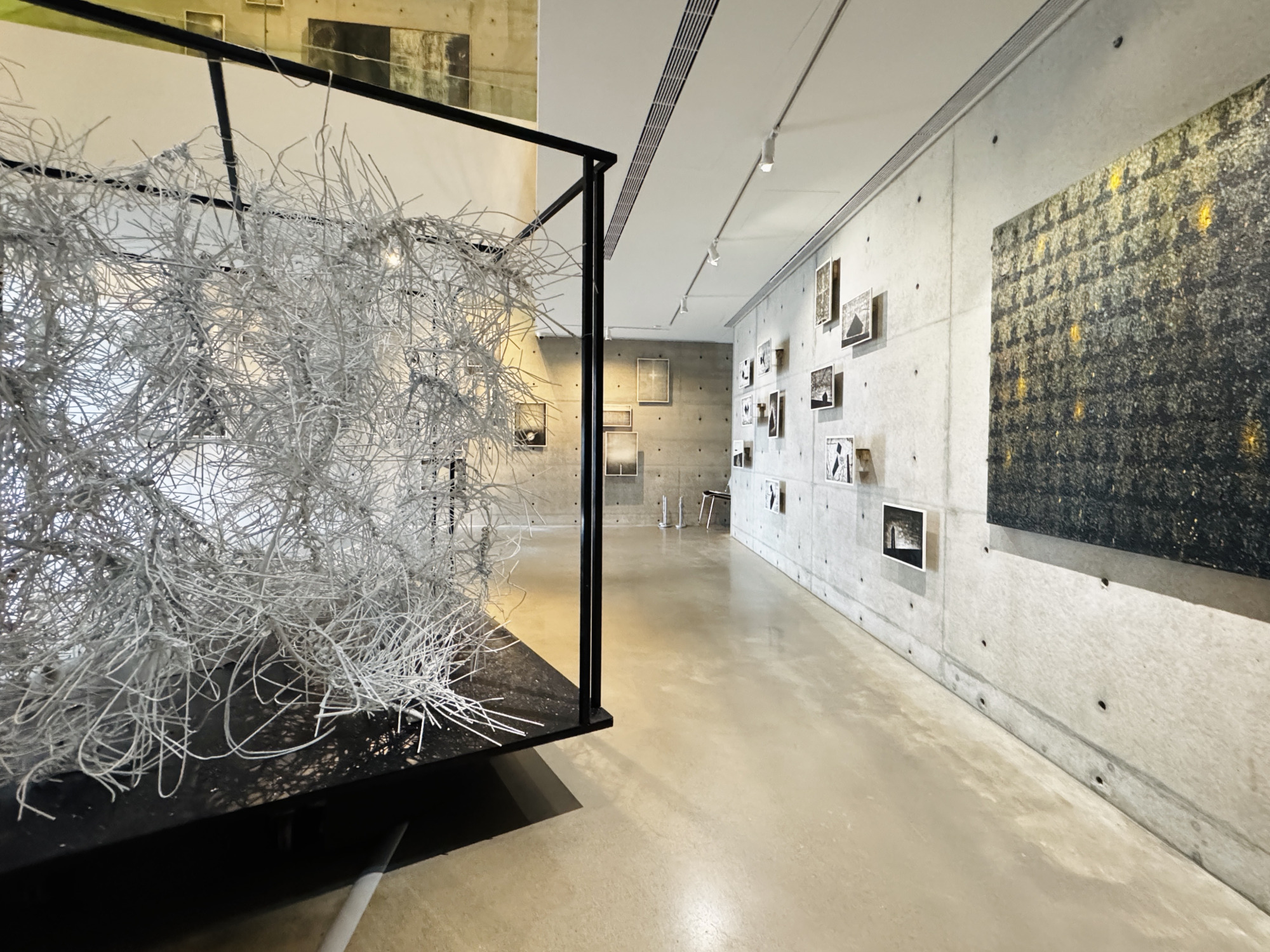
The work sits with ease on the walls and in the space, never feeling crowded or oppressive. For viewers, this instead creates a gentle sense of intimacy, as if being softly enveloped. As one’s gaze draws closer, the distance between person and painting quietly changes; the work of art begins to act upon the viewer in ways that may go unnoticed at first.
“I have always believed that art can purify the soul,” Chiang has long said. This conviction is also a central reason for the existence of the Art Center — and here, it is felt less as a statement than as an atmosphere.
In the world of the painting, discovering you are not alone
One regular visitor who has come more than ten times since the Art Center opened gives concrete shape to this response. She drives all the way from central Taiwan, sometimes spending nine hours on the same day round trip. Upon arrival, she enters the galleries with a near-ritual sense of focus, spending long stretches of time with work large and small on the walls.
She says that the painting Pisirian 15-03 offers her a consolation beyond words: “I feel like that painting,” she says after a thoughtful pause. “Dark and chaotic with a hint of tenderness. When I look at it, I feel understood.” In this way, a work often seen as the artist’s self-projection becomes, in the act of viewing, both the artist’s self-portrait and the viewer’s own portrait.
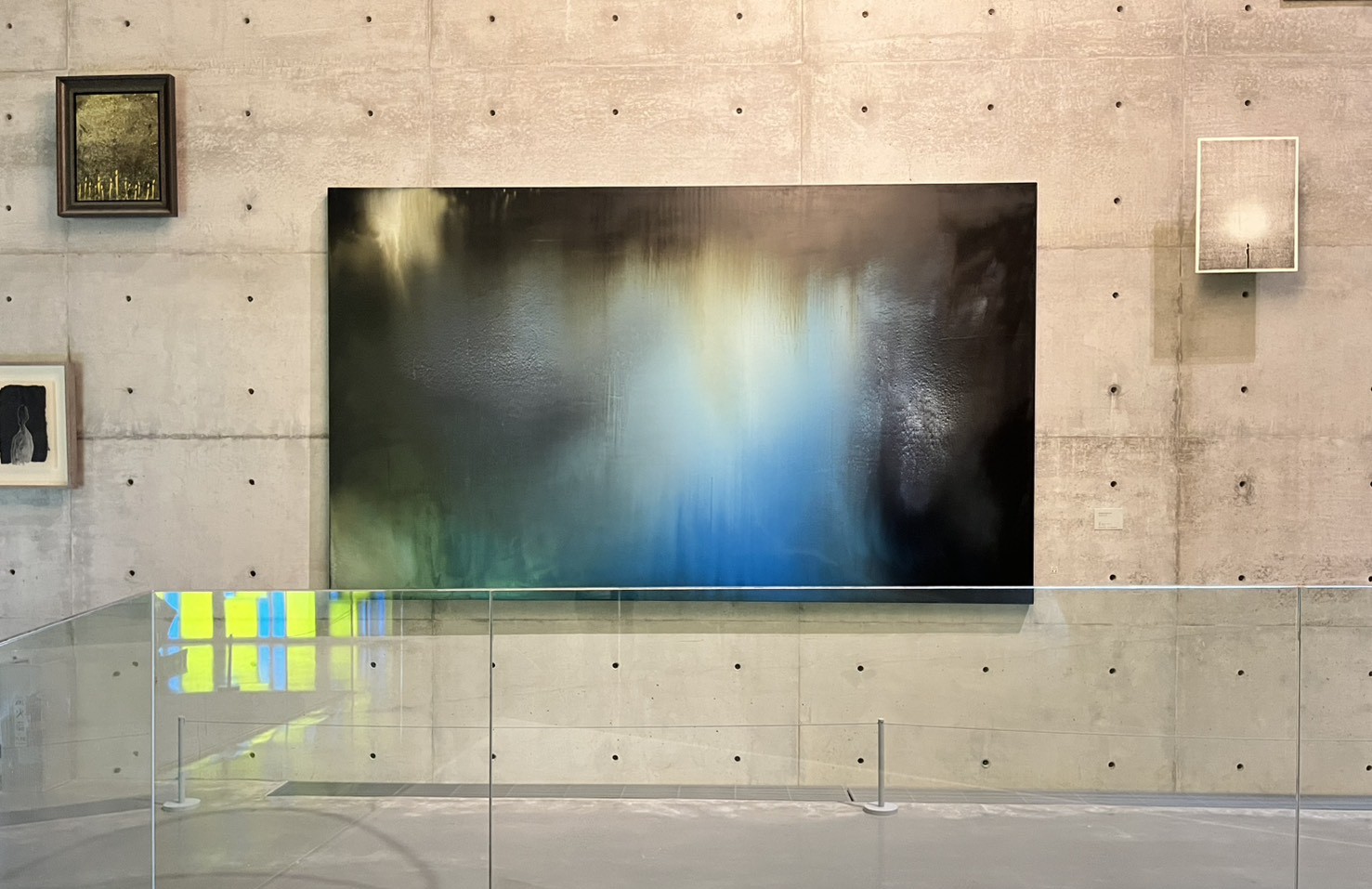
Within the world of the painting, artist and viewer speak to one another — sharing doubts and vulnerabilities that have not yet found a safe resting place, along with brief moments of clarity and small, hard-won victories. Precisely because of this meeting of hearts, people can return to their complex, draining everyday lives with a renewed sense that they are not alone.
On one work, Chiang has written a simple blessing for visitors: "The sky is blue, the breeze is soft — may your tomorrow be better than today."
Stepping into the heart of creation: a daily life in which an artist is still learning
My visit happened to coincide with a rare open-studio day during this six‑month exhibition. To concentrate fully on his work, Chiang usually requires complete solitude, and he has long kept others out of the studio — even his wife of more than sixty years has never witnessed his painting process. To step into this private workspace, even in his absence, felt precious.
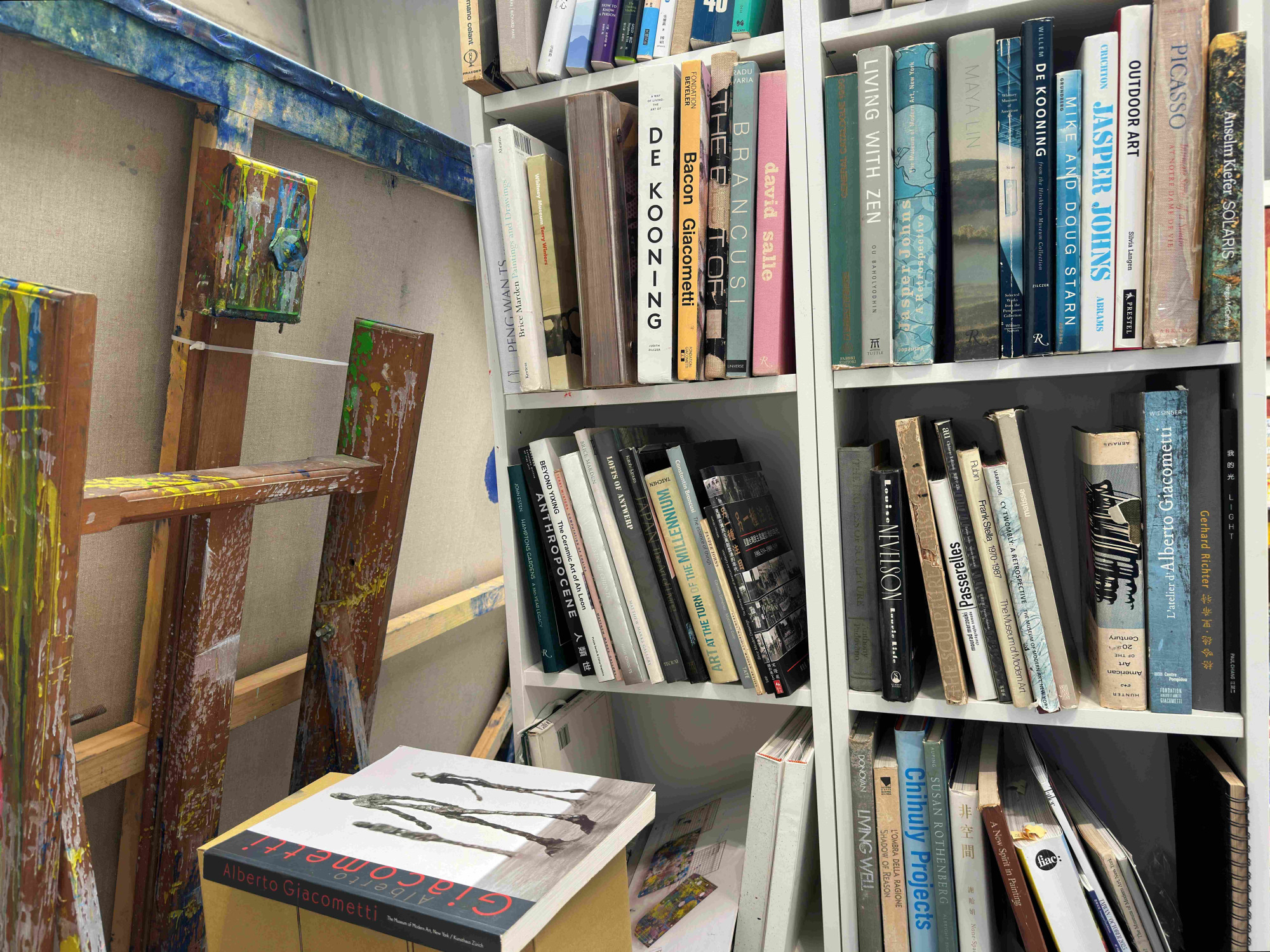
In-progress canvases lay flat on wooden boards; brushes, jars, and cups of pigment were set on the tables. The bookshelves were lined with volumes he regularly reads, mostly on art and architecture: biographies and monographs on Tadao Ando, Frank O. Gehry, Vincent van Gogh, Willem de Kooning, Gerhard Richter, Peng Wan-Chih, Hiroshi Sugimoto, and many more, along with several books on his lifelong favorite, Alberto Giacometti.
Two titles in particular — a practical guide to ChatGPT and a biography of Jensen Huang — came as a surprise, quietly revealing that even at eighty-four, Chiang continues to follow new knowledge and emerging technologies, his curiosity still undimmed.
Jazz at dusk: improvisation after a day of painting
That afternoon, a jazz salon brought a different kind of joyful surprise to the grounds. Since Chiang moved to Jinzun and removed the blackout cloth that once covered his studio windows, he has not only embraced sunlight and opened his heart, but his musical tastes have also broadened — from Bach, Debussy, and Mahler to Taylor Swift, and to jazz, which often keeps him company during his solo “happy hour” after a full day of painting, sculpture or other works.
Light, buoyant notes leap through the air as piano, double bass, and trumpet alternated between solo passages and call-and-response. From time to time, an enthusiastic “Ya!” of applause rose from the audience, enlivening the once-quiet setting.
Suddenly, a familiar figure appeared reflected in the glossy surface of the piano. Paul Chiang stood at the back of the full audience, and his camera raised toward the stage, smiling as he immersed himself in the sea of music with everyone else. In his blue-and-white checkered shirt and jeans, his gray hair tied in a low ponytail, he looked as spirited and slender as ever, his pant legs and shoes speckled with paint.
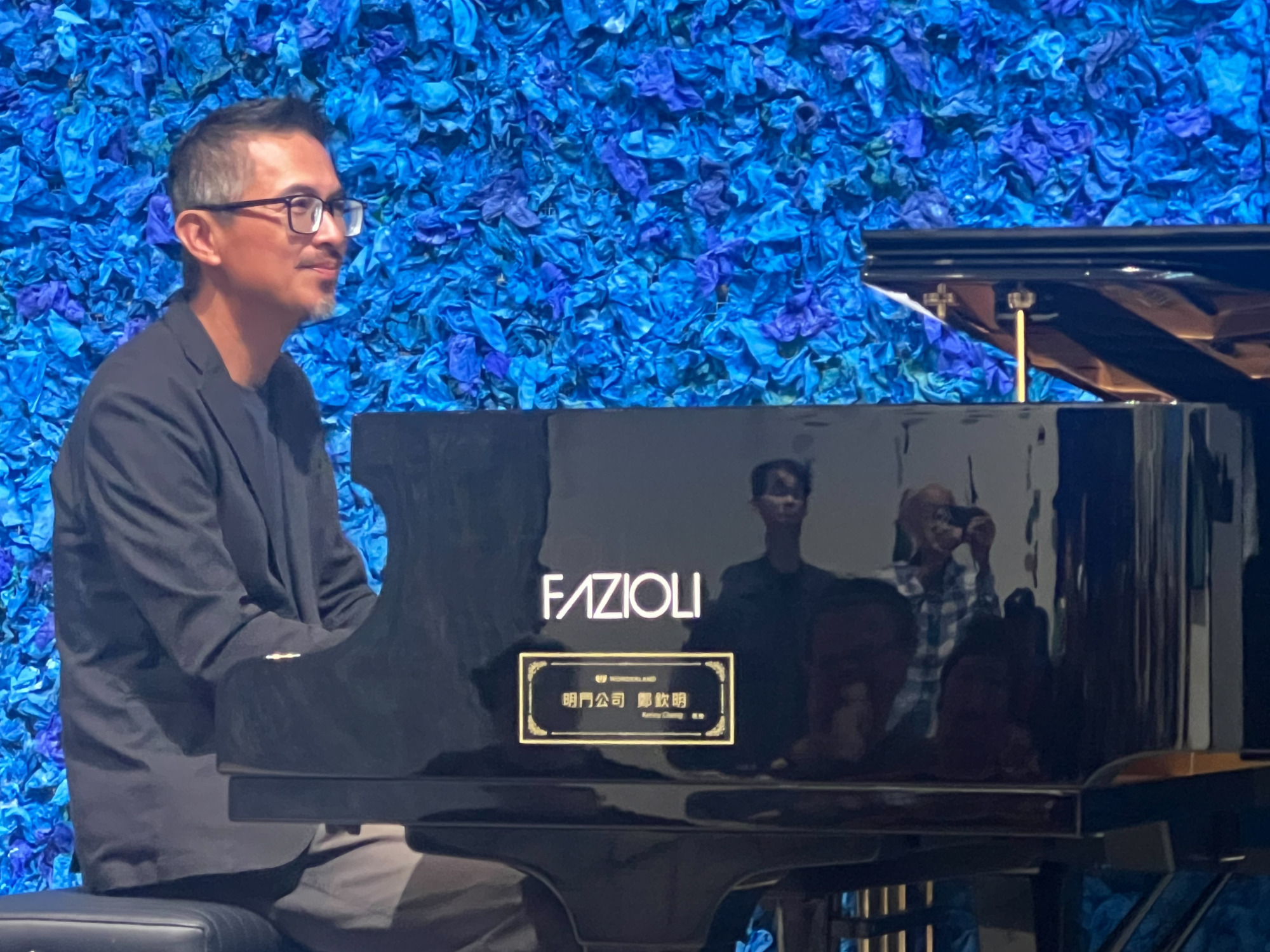
The music rippled on, drawing out bursts of crackling applause. Before long, the musicians’ children joined the stage — one lifting a trumpet, the other reading a poem aloud. The lines he read were simple and unguarded:
The unknown quietly exists, without demanding answers.
A feeling stirs in the air, and I notice it.
The ridgeline meets the sky; the sea meets a lone island.
Yet humans keep destroying the beauty of nature.
Here, jazz — with its embrace of improvisation, openness, and co-creation — and the child’s plainspoken feelings overlapped in a subtle resonance, like a sideways reflection of Chiang’s current creative state.
Using nature as canvas: letting creation return to becoming
“I walk the grounds almost every day, thinking about how the next work will be born and how it will continue the dialogue with this land,” Chiang says of the Art Center’s future. Many ideas have already taken shape, their outlines becoming clearer. In time, flowers, trees, and the movements of sun, moon, and stars will become the main agents of creation.
The plants that he and the horticulturalists once “stitched” into the soil, as if sewing into a canvas, have now grown into layered, nuanced scenery. The greenery he has tended day after day now calls new inspiration back to him. For this reason, the sculpture park currently being developed will not use steel or stone as its primary material; instead, plants themselves will be the starting point, allowing sunlight, air, insects, and birds to move freely among them, so that creation emerges as a continual, living vitality.
The same thinking extends into the galleries: tangible works give way to the light that pours from skylights, following the movement of celestial bodies. Perhaps the only recognizable trace of the artist will be a particular arrangement of sounds that he has composed.
From the dark studio of his earlier years, shut away from the world to the radiant views that filled his sight after opening the windows in Jinzun, Chiang’s true destination has never been any specific physical place before his eyes. It lies instead in a boundless spiritual realm and in the small, unwavering flame burning in the depths of his inner universe. “Nature is the most beautiful art,” he says with genuine admiration. As new imaginings arise, his work seems to move from the abstract toward the formless.
When I left, twilight draped the Art Center in a warm golden glow. Plants swayed in the wind, and the faint sound of the tide reached us from not far away. This is not a place that treats completion as an endpoint, but a realm of continual becoming, where mountains and sea, people and inner visions reflect one another in a thousand unconfined movements — like a contemporary Peach Blossom Spring.
(Filmed by Paul Chiang)
❏ This article also appears in our bimonthly e-newsletter. You’re warmly invited to subscribe to the Paul Chiang Arts & Cultural Foundation newsletter. Each issue features a cover story, updates from the Art Center, and moments from Paul Chiang’s daily creative practice. We hope these shared stories add a touch of light to your life.
In the Garden of Light & Sketches from Europe
2025/10/25 — 2026/8/31
Open Wed–Mon (closed Tue)
10:00–17:00 (last entry 16:30)
Book 1 day in advance & save 20% general admission.